Alternatives to Titanium Dental Implants: 2026 Guide

Alternatives to titanium dental implants are metal-free, biocompatible solutions for patients who have metal sensitivities, aesthetic concerns, or want to avoid metallic materials entirely. Zirconia is the leading non-metal option, with a 5-year survival rate of 83.8% that places it firmly in clinical consideration. Beyond zirconia, emerging materials like BioHPP and porous boron carbide are gaining research attention. Holistic non-implant options such as resin-bonded bridges and orthodontic space closure also offer viable paths for the right patients.
1. What are the best alternatives to titanium dental implants?
Zirconia is the most clinically validated non-metal implant material available today. Zirconia implant usage rose 12% in 2026, driven by patients seeking metal-free, biocompatible tooth replacement. That growth reflects a real shift in patient priorities, not just a trend.
Beyond zirconia, BioHPP (a zirconium-reinforced polymer) and porous boron carbide represent the next wave of research-stage alternatives. Non-implant options like resin-bonded bridges, flexible partial dentures, and autotransplantation round out the full picture for patients who want to avoid surgery altogether. The right choice depends on your bone health, aesthetic goals, budget, and sensitivity profile.
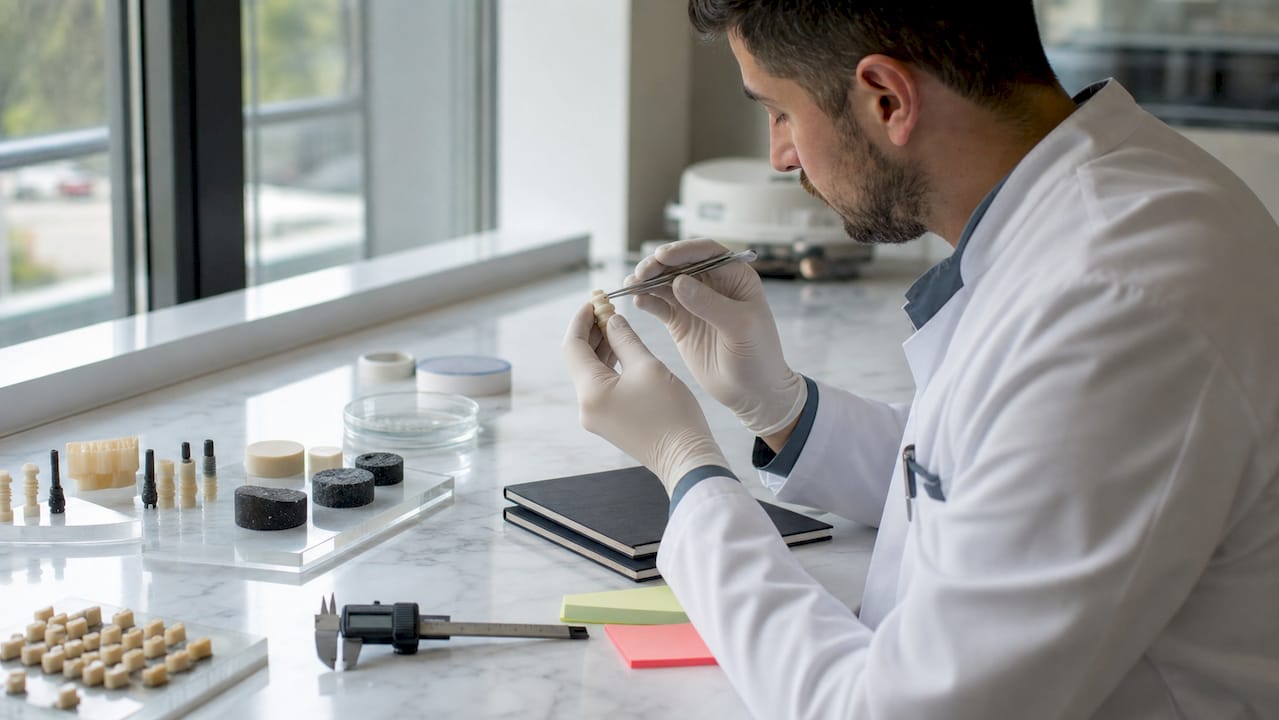
2. Zirconia dental implants: the leading non-metal option
Zirconia is a ceramic oxide material, chemically distinct from titanium. It contains no metallic ions, which makes it the preferred choice for patients with metal sensitivities or allergies. Its tooth-colored appearance also eliminates the gray gum line that can show through thin gum tissue with metal implants.
Clinically, zirconia performs well. The 5-year survival rate of 83.8% is lower than titanium’s long-term benchmarks, but it is strong enough to support single-tooth replacement in most patients. Zirconia also eliminates micro-gaps at the implant-abutment junction because most designs are single-piece constructions. Fewer micro-gaps mean less bacterial colonization and a lower risk of peri-implant infection.
The limitations are real and worth knowing before you commit:
- Brittleness: Zirconia is more susceptible to catastrophic fracture under extreme bite forces than titanium. Patients who grind their teeth need careful evaluation.
- Single-piece design: Angle adjustments after placement are not possible. This demands greater surgical precision from your provider.
- Higher cost: Zirconia implants typically cost more than titanium due to material and manufacturing complexity.
- Limited long-term data: Most clinical studies run 5–10 years. Titanium has decades of evidence; zirconia does not yet match that depth.
Pro Tip: If you are considering zirconia for a front tooth, ask your provider specifically about their case volume with single-piece zirconia systems. Placement precision matters more here than with titanium.
3. Emerging materials: BioHPP and porous boron carbide
BioHPP is a zirconium-reinforced PEEK polymer developed as a prosthetic framework material. It achieves a fracture resistance up to 1,623.31 N and an elastic modulus close to natural cortical bone at approximately 4 GPa. That elastic modulus matters because it reduces stress shielding, the process where a stiffer implant absorbs load that should go through the bone, potentially causing bone loss over time.
BioHPP also shows favorable stress distribution compared to metal frameworks, which may reduce mechanical complications in full-arch restorations. It is currently used primarily as a prosthetic superstructure material rather than as an implant body itself. Long-term clinical trials are still needed before it can be recommended as a standalone implant solution.
Porous boron carbide, marketed under the research name Sverkom, takes a different approach entirely. Its interconnected porous scaffold promotes direct bone ingrowth rather than relying on surface coatings. The material is lightweight, corrosion-resistant, and designed to integrate biologically with surrounding bone. Sverkom is still in early research phases and has not yet reached routine clinical use.
Pro Tip: Ask your dental specialist whether BioHPP frameworks are available for your restoration type. For full-arch cases, BioHPP superstructures can be a practical metal-free upgrade even when the implant body itself is titanium.
4. Non-implant and holistic tooth replacement options
Not every patient needs an implant. Holistic dental experts recommend resin-bonded bridges, orthodontic movement, and autotransplantation as less invasive paths that preserve natural bone and minimize surgical trauma. These options suit patients who want to avoid surgery, have insufficient bone for implants, or prefer a reversible solution.
Here is a comparison of the main non-implant alternatives:
| Option | Invasiveness | Approximate lifespan | Reversible? | Best for |
|---|---|---|---|---|
| Resin-bonded (Maryland) bridge | Low | 10–15 years | Partially | Front teeth with healthy adjacent teeth |
| Flexible partial denture | None | 5–8 years | Yes | Multiple missing teeth, budget-conscious patients |
| Orthodontic space closure | Low | Permanent | No | Patients with adjacent teeth that can move |
| Autotransplantation | Moderate | Long-term if successful | No | Younger patients with suitable donor teeth |
Resin-bonded bridges use minimal-prep ceramic wings bonded to adjacent teeth. They require no implant surgery and preserve bone. The trade-off is that they depend on the health of neighboring teeth and can debond over time.
Flexible partial dentures (such as those made with Valplast nylon resin) are removable, metal-free, and comfortable. They do not stimulate bone, so gradual bone loss under the denture is a long-term concern.
Orthodontic space closure works only when adjacent teeth can be moved to fill the gap. It is most practical for younger patients and requires careful bite planning to avoid functional problems.
Autotransplantation moves one of your own teeth (often a wisdom tooth) into the empty socket. Non-implant holistic alternatives like this preserve natural tissue and support patient-centered care. Success depends on root morphology and the skill of the surgeon.
5. Key factors when choosing a non-titanium implant option
Choosing the right material requires more than picking what sounds appealing. Several clinical and personal factors determine which option will actually work for you.
- Biocompatibility needs. If you have a documented titanium sensitivity or autoimmune condition, zirconia or a non-implant option is the logical starting point. Review Implantveneerguide’s guide on autoimmune conditions and implants before your consultation.
- Aesthetic priorities. For front teeth visible when you smile, zirconia’s tooth-colored body prevents gray gum-line show-through. Titanium can be visible through thin gum tissue over time.
- Bone density and volume. Zirconia single-piece implants require adequate bone in the right position because no angle correction is possible after placement. Patients with low bone density should also review osteoporosis and implant suitability before committing.
- Bite force and grinding habits. Zirconia’s brittleness makes it a riskier choice for heavy grinders. Titanium or a non-implant option may be safer in those cases.
- Budget. Zirconia implants cost more than titanium. Non-implant options like flexible partial dentures cost significantly less but have shorter lifespans. Use a dental cost estimator to model your total treatment cost before deciding.
- Long-term maintenance. Implants require ongoing monitoring for peri-implant health. Non-implant options like bridges and dentures have their own maintenance demands. Neither path is maintenance-free.
Pro Tip: Get a CBCT (cone beam CT) scan before any implant consultation. It shows bone volume and density in three dimensions, which is the single most important factor in determining which implant material and design will work for your anatomy.
6. How to talk to your dentist about non-titanium options
Walking into a consultation informed changes the conversation. Most general dentists default to titanium because it is the standard, not because alternatives have been ruled out for you. Asking specific questions shifts the discussion toward your actual needs.
Questions worth asking at your consultation:
- “Do you place zirconia implants, or would you refer me to a specialist?”
- “What is your case volume with single-piece ceramic implant systems?”
- “Am I a candidate for a resin-bonded bridge instead of an implant?”
- “What diagnostic imaging will you use to assess my bone before recommending a material?”
- “What is the total cost difference between titanium and zirconia for my case?”
Understanding the diagnostic tools your provider uses also matters. CBCT imaging, periodontal charting, and occlusal analysis are standard for implant planning. If a provider recommends an implant material without these assessments, that is a red flag. You can also use Implantveneerguide’s candidacy screening tool to assess your suitability before your first appointment.
Key takeaways
Zirconia is the most clinically supported non-metal implant option, but the best choice depends on your bone health, bite forces, aesthetic goals, and sensitivity profile.
| Point | Details |
|---|---|
| Zirconia is the top alternative | It has an 83.8% five-year survival rate and suits metal-sensitive patients well. |
| Single-piece design requires precision | Zirconia cannot be angle-adjusted post-placement, so surgical accuracy is critical. |
| BioHPP suits prosthetic frameworks | Its bone-like elastic modulus reduces stress shielding in full-arch restorations. |
| Non-implant options preserve bone | Resin-bonded bridges and autotransplantation avoid surgery and maintain natural tissue. |
| Bone density drives material choice | A CBCT scan is the most important diagnostic step before selecting any implant material. |
My honest assessment of the alternatives debate
By Georgina
After reviewing the clinical literature and speaking with patients who have gone through this decision, I keep coming back to one uncomfortable truth: most patients asking about alternatives to titanium are not asking because titanium is unsafe. They are asking because no one took the time to explain their full range of options.
Titanium remains clinically superior for complex, high-load cases. That is not marketing. It is 60 years of outcome data. But for a single front tooth in a patient with thin gum tissue and a mild nickel sensitivity, zirconia is genuinely the better clinical choice, not just a preference.
What I find frustrating is the binary framing. Patients are often told it is either titanium or nothing credible. BioHPP frameworks, resin-bonded bridges, and autotransplantation are real clinical tools with real indications. They are not fringe options. They are underused because they require more planning and specialist skill.
My advice: do not let the default drive your decision. Get a CBCT scan, ask about your full range of options, and work with a provider who has hands-on experience with the material you are considering. The best implant is the one placed correctly in the right patient, regardless of what it is made of.
— Georgina
What Implantveneerguide offers for your implant research
Choosing between titanium, zirconia, or a non-implant option is one of the most consequential decisions in restorative dentistry. Getting it wrong means revision surgery, additional cost, and months of recovery.
Implantveneerguide provides evidence-based guides built with dental professionals, covering every material and procedure discussed in this article. Start with the implant candidacy checker to get a structured assessment of which options fit your clinical profile. For a broader look at procedures including bridges, grafting, and full-arch options, the dental procedures overview covers each path in detail. If cost is a deciding factor, the financial planning guide breaks down US price ranges and insurance considerations for every major treatment type.
FAQ
What is the most common alternative to titanium dental implants?
Zirconia is the most widely used non-metal implant material. It has a 5-year survival rate of 83.8% and is preferred for patients with metal sensitivities or aesthetic concerns about gum-line discoloration.
Are zirconia implants as strong as titanium?
Zirconia is strong under normal bite forces but more brittle than titanium under extreme loads. Patients who grind their teeth face a higher fracture risk with zirconia and should discuss this with their provider before choosing.
What are non-implant alternatives to titanium dental implants?
Resin-bonded bridges, flexible partial dentures, orthodontic space closure, and autotransplantation are all established non-implant options. They are less invasive than implants and preserve natural bone, though most have shorter lifespans than osseointegrated implants.
Is BioHPP a replacement for titanium implants?
BioHPP is currently used as a prosthetic framework material, not as an implant body. Its elastic modulus closely matches natural bone, which may reduce stress shielding in full-arch restorations, but long-term clinical trials are still ongoing.
Who is the best candidate for ceramic dental implant options?
Patients with documented metal sensitivities, thin gum tissue over front teeth, or autoimmune conditions are the strongest candidates for ceramic implant options like zirconia. Adequate bone volume and a low-to-moderate bite force profile are also required for successful placement.