Dental Implant Cost in 2026: Your Complete Price Guide

Dental implant cost is the total price of replacing a missing tooth with a titanium post, abutment, and custom crown, typically ranging from $3,000 to $6,000 per tooth in 2026. The national average sits around $4,500, but that number shifts significantly based on where you live, who places the implant, and whether you need preparatory procedures like bone grafting. Most patients are surprised to learn that the quoted price rarely reflects the true all-in cost. This guide breaks down every component, explains what drives prices up or down, and helps you plan your budget with confidence.
What factors contribute to the final dental implant cost?
The full price of a dental implant is not a single charge. It is a sum of several distinct components, each billed separately by most practices.
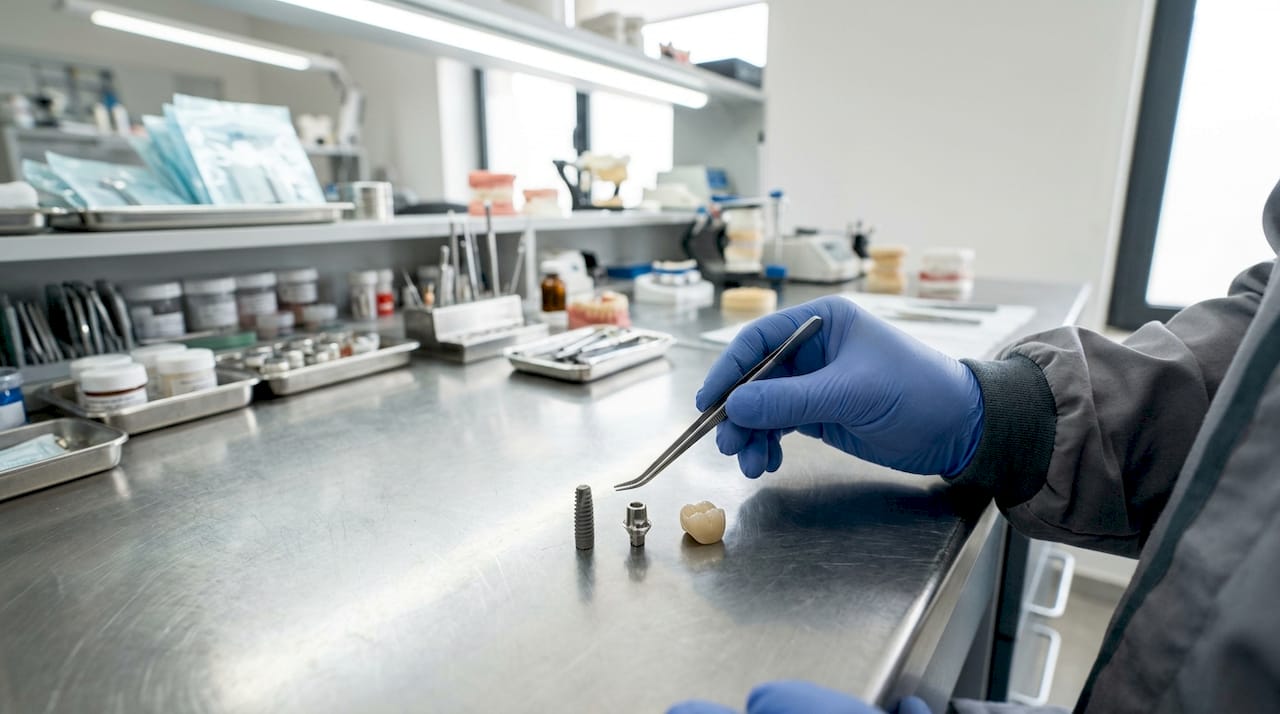
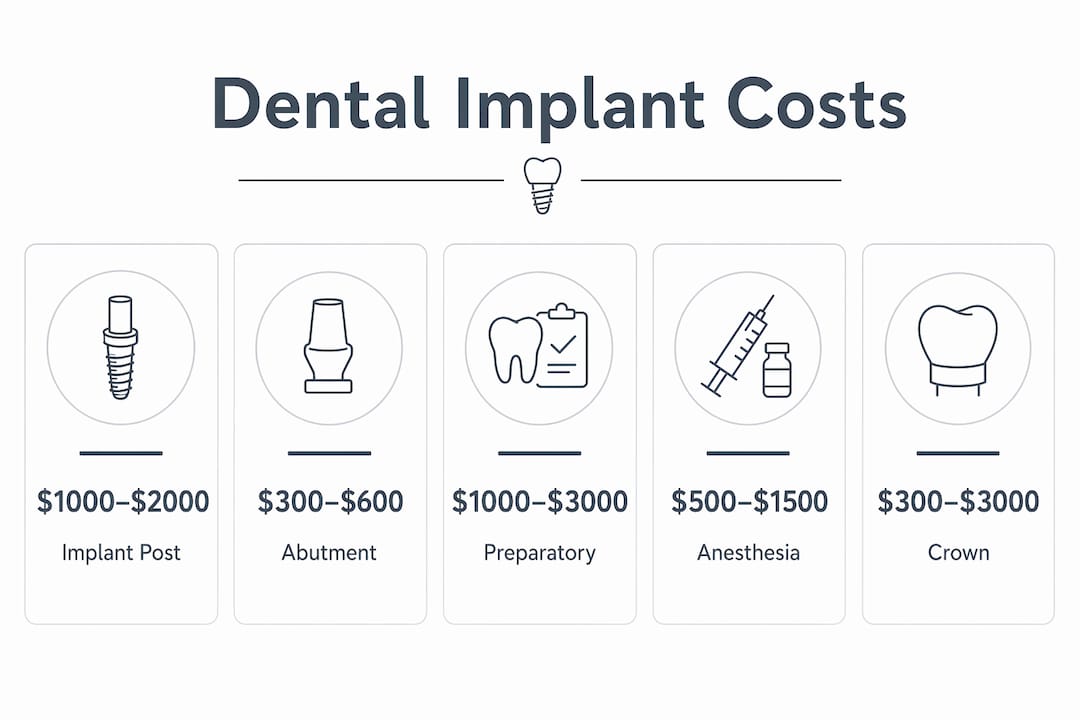
The three core parts are the implant post, the abutment, and the crown. The implant post averages $1,000–$2,000, the abutment runs $300–$600, and the crown adds another $800–$2,000. Diagnostics, including a CBCT scan for precise surgical planning, cost an additional $150–$500. Add those together and you reach the $3,000–$6,000 range before any preparatory work.
Preparatory procedures are where many patients experience sticker shock. Bone grafts range from $250 to $3,000, and sinus lifts run $1,500–$3,000 per side. These are not optional extras when your jaw lacks sufficient bone density. They are clinical requirements, and implant estimates often omit them entirely from initial quotes.
Here is a summary of typical cost components:
| Component | Typical cost range |
|---|---|
| Titanium implant post | $1,000–$2,000 |
| Abutment | $300–$600 |
| Porcelain crown | $800–$2,000 |
| CBCT scan / diagnostics | $150–$500 |
| Bone graft (if needed) | $250–$3,000 |
| Sinus lift (if needed) | $1,500–$3,000 per side |
| Anesthesia / sedation | $300–$1,000 |
Anesthesia and follow-up appointments add to the total as well. Sedation fees vary by practice and procedure length. Maintenance visits, periodic X-rays, and professional cleanings are ongoing costs that protect your investment over time.
Pro Tip: Always request an itemized quote before committing to any provider. A single line reading “dental implant: $4,500” tells you nothing about what is and is not included. Ask specifically whether bone grafting, imaging, and the crown are covered in that figure.
How do provider type and location affect implant prices?
The type of provider you choose has a larger effect on price than most patients expect. Specialists perform implants at a median cost 29% lower than general dentists, with median costs of $3,400 versus $4,800. That finding runs counter to the common assumption that specialists always charge more.
The reason is efficiency. Oral surgeons and periodontists place implants at high volume, have established supplier relationships, and operate with workflows built around this single procedure. A general dentist placing occasional implants cannot match that economy of scale. The result is a higher per-case fee, not a lower one.
Geographic location adds another layer of variation. Minneapolis carries the highest median implant cost among major surveyed cities at $5,505, while Houston sits at the low end at $3,665. State-level data shows Mississippi averaging around $3,200 and high-cost states like California and Hawaii reaching $5,800–$6,000. Local cost of living, practice overhead, and market competition all drive these differences.
| Provider type / region | Typical median cost |
|---|---|
| Specialist (oral surgeon / periodontist) | $3,400 |
| General dentist | $4,800 |
| Houston (low-cost city) | $3,665 |
| Minneapolis (high-cost city) | $5,505 |
| Mississippi (low-cost state) | ~$3,200 |
| California / Hawaii (high-cost states) | $5,800–$6,000 |
Pro Tip: Do not choose a specialist solely because they are cheaper. Choose them because they specialize. The cost savings are a byproduct of expertise and volume, not a trade-off against quality. Use the dental implant consultation checklist to vet any provider before committing.
What financial options and insurance coverage exist for implants?
Most dental insurance plans treat implants as elective. Many plans exclude implants entirely or cap coverage at roughly 50% with annual maximums of $1,000–$2,500. That ceiling rarely covers even the implant post alone, let alone the abutment, crown, and any preparatory procedures.
Before assuming your plan covers nothing, check for a few specific provisions:
- Missing tooth clause. Some plans exclude coverage for teeth that were missing before your policy started. If your tooth was extracted years ago, you may be ineligible for any reimbursement.
- Waiting periods. Many plans impose 12-month waiting periods before major restorative work is covered.
- Bone graft coverage. Bone grafts and sinus lifts are rarely covered by dental insurance, even when the implant itself qualifies for partial reimbursement.
Financing options fill the gap for most patients. CareCredit and HSA or FSA accounts are the most widely used methods. CareCredit offers promotional interest-free periods, typically 12–24 months, which can make a $4,500 procedure manageable at roughly $190–$375 per month. HSA and FSA funds are pre-tax dollars, which effectively reduces your out-of-pocket cost by your marginal tax rate.
Pro Tip: Dental school clinics at accredited institutions offer implant placements at significantly reduced fees under faculty supervision. Treatment timelines are longer, but the clinical standards meet the same requirements as private practice. This is a legitimate option worth exploring if cost is your primary constraint.
Are dental implants worth the cost long-term?
Dental implants carry a higher upfront price than bridges or dentures, but the long-term math often favors them. Implants document success rates of 15–25 years in clinical literature. A bridge, by comparison, typically requires replacement every 10–15 years and involves grinding down adjacent healthy teeth to anchor the restoration.
The health case is equally strong. When a tooth root is lost, the jawbone beneath it begins to resorb. Implants are the only tooth replacement option that preserves bone by mimicking the stimulation of a natural root. That preservation prevents the facial collapse that long-term denture wearers experience. You can read more about how implants compare structurally in this implant vs. bridge decision framework.
The risks of cutting corners are real and well-documented:
- Choosing a provider based on the lowest quote without verifying clinical outcomes increases the risk of implant failure.
- Failed implants require removal, bone grafting, and re-placement, which can cost more than the original procedure.
- Discount implant tourism abroad carries additional risks from inconsistent material standards and limited follow-up care.
Patients who choose the cheapest available provider without reviewing clinical track records face a significantly higher risk of implant failure and the compounding costs of corrective treatment. The long-term value of a dental implant depends entirely on the quality of placement, not just the quality of the components.
The cost of dental implants is best evaluated over a 20-year horizon, not a single appointment. When you factor in the replacement cycles of bridges and dentures, the absence of bone loss, and the preservation of adjacent teeth, implants frequently represent the lower-cost option over time.
Key Takeaways
A single dental implant costs $3,000–$6,000 on average in 2026, but the true all-in price depends on preparatory procedures, provider type, location, and financing choices.
| Point | Details |
|---|---|
| Core cost range | A complete implant runs $3,000–$6,000; the national average is around $4,500 per tooth. |
| Preparatory procedures add cost | Bone grafts ($250–$3,000) and sinus lifts ($1,500–$3,000) are often excluded from initial quotes. |
| Specialists often cost less | Oral surgeons and periodontists charge a median of 29% less than general dentists for implants. |
| Insurance rarely covers the full cost | Most plans cap implant coverage at 50% with $1,000–$2,500 annual maximums; bone grafts are rarely covered. |
| Long-term value is strong | Implants document 15–25 year success rates and prevent jawbone resorption, reducing lifetime replacement costs. |
What I’ve learned from years of watching patients navigate implant pricing
The single biggest mistake I see patients make is treating the quoted price as the final price. A number like “$3,800 per implant” sounds manageable until the bone graft consultation reveals an additional $1,800 that was never mentioned. That gap between the advertised cost and the real cost is where most of the frustration lives.
My honest advice: get at least three itemized quotes before making any decision. Not three ballpark figures. Three line-by-line breakdowns that include imaging, the post, the abutment, the crown, any grafting, anesthesia, and follow-up visits. That exercise alone will teach you more about implant pricing than any article can.
The specialist-versus-general-dentist question surprises almost everyone. Patients assume a periodontist will cost more. The data says otherwise, and the clinical logic backs it up. A provider who places implants every day has fewer complications, shorter chair time, and better supplier pricing. Those efficiencies pass through to the patient.
One more thing: do not let cost alone drive you toward the cheapest option. A failed implant is not just an inconvenience. It is a second surgery, more bone grafting, and a longer recovery. The recovery timeline for a re-treatment case is substantially longer than for a first-time placement. Spend the time upfront to verify credentials, review case histories, and ask hard questions. The investment in due diligence pays for itself.
— Georgina
Plan your implant costs with Implantveneerguide’s free tools
Implantveneerguide provides evidence-based resources built specifically for patients at the cost-planning stage of their implant decision.
The cost estimator tool lets you input your location and procedure variables to generate a personalized price range based on current US market data. If you are still unsure whether you are a candidate, the implant candidacy checker walks you through the clinical screening criteria that dentists use, so you arrive at your consultation already informed. Every guide on Implantveneerguide is developed with dental professionals and grounded in peer-reviewed research, with no advertising influence on the recommendations.
FAQ
What is the average dental implant cost in 2026?
The national average for a single-tooth dental implant is approximately $4,500 in 2026, with a typical range of $3,000–$6,000 depending on location, provider, and whether preparatory procedures are needed.
Does dental insurance cover implant costs?
Most dental insurance plans either exclude implants entirely or cover roughly 50% up to an annual maximum of $1,000–$2,500. Bone grafts and sinus lifts are rarely covered, leaving most patients responsible for the majority of costs.
Why do specialists sometimes charge less than general dentists for implants?
Oral surgeons and periodontists place implants at higher volume with more efficient workflows, which lowers their per-case cost. Studies show specialists charge a median of 29% less than general dentists for the same procedure.
What preparatory procedures increase the total cost?
Bone grafts ($250–$3,000) and sinus lifts ($1,500–$3,000 per side) are the most common procedures that add to the base implant price. They are required when the jawbone lacks sufficient density to support the titanium post.
How can I reduce my out-of-pocket dental implant expense?
Using HSA or FSA funds, applying for CareCredit financing, and requesting treatment at an accredited dental school clinic are the most effective ways to reduce out-of-pocket costs without compromising clinical standards.