Dental Implants Without Insurance: 2026 Cost Guide

Dental implants without insurance require patients to pay the full procedure cost out of pocket, which for a single tooth ranges from $3,000 to $6,000, averaging about $4,500 in 2026. That price covers the implant post, abutment, and crown as a complete unit. Most dental insurance plans either exclude implants entirely or cap annual benefits at $1,000–$2,000, making full coverage rare. Knowing exactly what drives the cost, and how to pay for it, is the difference between a smart investment and a financial surprise.
How much for dental implants without insurance?
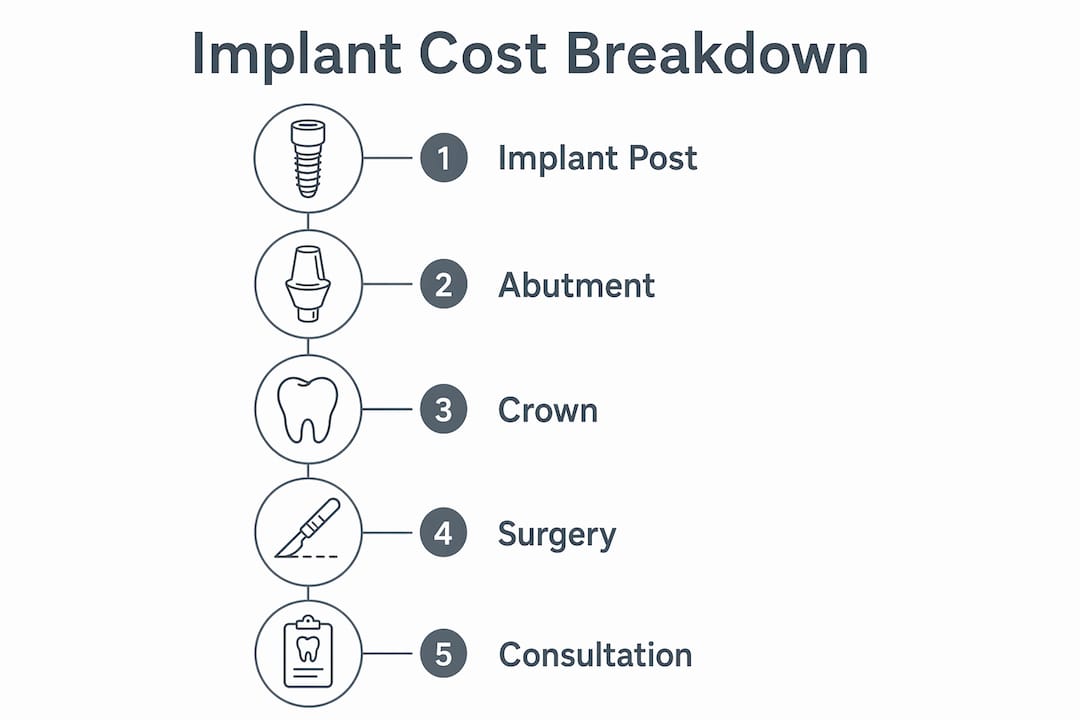
The $3,000–$6,000 range for a single implant is a national average. It reflects three core components bundled together: the titanium post surgically placed in the jawbone, the abutment connector, and the porcelain or ceramic crown on top. Each piece has its own price, and not every quote includes all three.
State-level pricing shows just how wide the gap can be. Costs range from $3,200 in Mississippi to $6,000 in Hawaii, driven by local cost of living, provider density, and market competition. A patient in rural Alabama and a patient in San Francisco are not shopping in the same market, even if they need the same procedure.

Full-mouth restorations cost far more. Full-arch implant-supported restorations run $14,000–$36,000 per arch, with complex cases exceeding $70,000. The All-on-4 procedure, which replaces an entire arch with four implants, averages about $13,828 per arch in mid-2026. These numbers make upfront financial planning non-negotiable.
What components make up the total implant cost?
Most patients focus on the implant itself and miss the full picture. A complete single-tooth replacement involves several distinct services, each billed separately by many providers.
The core components are:
- Implant post: The titanium screw placed into the jawbone. This is the surgical component and typically the most expensive single item.
- Abutment: The connector piece that links the post to the crown. Often billed separately from the post.
- Crown: The visible tooth replacement, usually porcelain or ceramic. Prices vary based on material and lab fees.
- 3D imaging (CBCT scan): Cone beam computed tomography scans assess bone density and anatomy before surgery. These scans are not always included in the quoted price.
- Surgical guide: A custom-printed guide used during implant placement for accuracy. Some clinics charge separately for this.
- Bone graft: Required when bone volume is insufficient. This adds $300–$3,000 depending on graft size and source material.
Poor cost transparency is one of the most common complaints among implant patients. A quoted price of $2,500 may cover only the post, leaving the abutment, crown, and imaging as add-ons. Itemized, all-inclusive quotes covering every step protect patients from unexpected fees.
Pro Tip: Before signing any treatment agreement, ask your provider for a written, itemized quote that lists every charge separately, including imaging, surgical guides, and any potential bone grafting fees.
How do geography and provider type affect dental implant prices?
Location is one of the strongest predictors of what you will pay. Urban markets with high overhead costs, such as New York City or Los Angeles, push prices toward the top of the national range. Smaller cities and rural areas tend to sit closer to the lower end.
Provider type creates a counterintuitive pricing dynamic. Specialists charge a median of about $3,400 per implant, while general dentists charge a median closer to $4,800. That gap exists because high-volume specialists have refined workflows, dedicated surgical teams, and established lab relationships that reduce per-procedure costs. Most patients assume specialists cost more. The data says the opposite.
Choosing a provider based on volume and specialization, rather than lowest advertised price, often delivers better value and fewer complications over the life of the implant.
High-volume implant clinics can deliver quality care at 30–50% lower prices than low-volume general practices. The efficiency gains from doing hundreds of implants per year translate directly into lower patient costs. When searching for affordable dental implants near you, provider volume is a more reliable quality signal than price alone.
The Implantveneerguide dental implant pricing guide breaks down these regional and provider-type differences in detail, with 2026 figures by state.
What financing and payment options exist without insurance?
Paying out of pocket does not mean paying all at once. Several structured options make dental implant prices manageable without relying on traditional insurance.
-
FSA and HSA accounts: Flexible Spending Accounts and Health Savings Accounts let you pay for implants with pre-tax dollars. FSA and HSA payments deliver effective tax savings of 22–37%, depending on your tax bracket. That is a meaningful discount on a $4,500 procedure.
-
Dental savings plans: These membership programs charge $80–$180 per year and provide 15–50% discounts at participating dentists. They are not insurance. They are negotiated fee schedules that reduce your out-of-pocket cost immediately, with no waiting periods or annual maximums.
-
In-office financing: Many clinics offer 0% APR financing for 12–24 months, or longer-term plans through third-party lenders. 0% APR financing options can spread a $4,500 cost into monthly payments under $200. Read the terms carefully. Deferred interest clauses can turn a 0% offer into a high-interest debt if the balance is not paid in full by the promotional deadline.
-
Medical insurance billing: If tooth loss resulted from trauma, cancer treatment, or a congenital condition, surgical fees may qualify for medical insurance coverage rather than dental. This requires documentation proving medical necessity. When it applies, it can save thousands per arch.
-
Payment plan negotiation: Some private practices will structure custom payment plans directly with patients, especially for multi-implant cases. This works best when you have an established relationship with the provider.
Pro Tip: Combine an HSA or FSA contribution with a dental savings plan membership. The two strategies stack, giving you a tax discount on top of a negotiated fee reduction.
The Implantveneerguide insurance and financing guide covers each of these options with eligibility details and step-by-step instructions.
What are the risks of choosing very low-cost implant options?
The lowest-priced implant is rarely the cheapest option over time. This is the most important cost concept patients miss when searching for cheap dental implants near me.
Red flags to watch for include:
- Off-brand or imported components: Off-brand implant components often lack rigorous clinical validation. Failure rates within 1–2 years are significantly higher than with established implant systems.
- Implant failure and bone loss: A failed implant requires removal, bone grafting to restore lost tissue, and a second implant placement. These corrective procedures can double or triple the original cost.
- Infections: Poorly placed or low-quality implants increase infection risk, which can spread to adjacent teeth and bone.
- No itemized quote: Providers who refuse to give a detailed written quote are a warning sign. Transparency is a baseline expectation, not a premium service.
- Unusually low advertised prices: A single-tooth implant advertised below $1,500 almost always excludes the crown, abutment, or imaging. The final bill will be higher.
Prioritizing long-term implant value over the lowest initial cost is the single most consistent piece of advice from experienced implant dentists. A failed cheap implant costs more to fix than a quality implant costs to place.
Patients who have experienced implant failure often spend more correcting the problem than they would have spent on a quality provider from the start. The financial planning guide at Implantveneerguide walks through how to evaluate total cost of ownership for implant treatment, not just the upfront price.
Key Takeaways
A single dental implant without insurance costs $3,000–$6,000 on average, but the total you pay depends heavily on location, provider type, and which components are included in the quoted price.
| Point | Details |
|---|---|
| National average cost | A complete single implant (post, abutment, crown) averages $4,500 in 2026. |
| Geography matters | State-level prices range from $3,200 in Mississippi to $6,000 in Hawaii. |
| Specialists often cost less | Specialist providers charge a median of $3,400 vs. $4,800 for general dentists. |
| Tax-advantaged payment options | FSA and HSA accounts reduce effective implant costs by 22–37% through pre-tax spending. |
| Cheap implants carry hidden costs | Off-brand components risk failure within 1–2 years, potentially doubling total expenses. |
What I’ve learned about “affordable” implants after years of patient research
The word “affordable” gets misused constantly in dental marketing. Patients hear it and think low price. What it should mean is good value relative to what you receive and how long it lasts.
I have reviewed hundreds of patient cases where the decision to go with the cheapest provider led to a second, more expensive procedure within three years. The pattern is consistent. A failed implant from an off-brand component is not a rare complication. It is a predictable outcome when clinical validation is absent.
The counterintuitive truth about dental implant prices is that specialists, who most patients assume are the expensive option, often charge less than general dentists for the same procedure. That finding from comparative market data should change how patients approach their search. Volume and specialization drive efficiency, and efficiency drives price down.
My strongest advice is this: get at least three itemized quotes, ask each provider which implant system they use and why, and check whether your HSA or FSA balance can offset part of the cost before you commit. The consultation checklist at Implantveneerguide gives you the exact questions to ask at each appointment. Use it before you sign anything.
Financing is a legitimate tool, but read every term. A 0% APR offer that converts to 26.99% after 18 months is not a deal. It is a liability.
— Georgina
Planning your implant costs with Implantveneerguide
Knowing the national averages is a starting point. Getting a number that reflects your specific situation, your location, your bone health, and your treatment complexity, requires a more personalized approach.
Implantveneerguide offers two tools built specifically for this. The candidacy screening tool helps you assess whether you are a strong candidate for implants before you spend time or money on consultations. The cost estimator tool generates realistic price ranges based on your region and treatment type, so you walk into every provider conversation with a benchmark in hand. Both tools are evidence-based, free to use, and built with input from practicing dental professionals.
FAQ
What is the average price for a single dental implant in 2026?
The national average for a complete single dental implant is approximately $4,500, with the full range running $3,000–$6,000 depending on location and provider type.
Does dental insurance cover implants at all?
Most dental insurance plans exclude implants or cover only a small fraction of the cost, with annual benefit maximums typically capped at $1,000–$2,000.
Are dental implant payment plans widely available?
Many clinics offer in-office financing, including 0% APR options for 12–24 months, and third-party lenders provide longer-term plans for patients who qualify.
Can I use my HSA or FSA to pay for dental implants?
Yes. FSA and HSA funds cover dental implants as a qualified medical expense, reducing your effective cost by 22–37% through pre-tax dollar savings.
Why do specialists sometimes charge less than general dentists for implants?
High-volume specialists achieve lower per-procedure costs through efficient workflows and established lab partnerships, with a median charge of about $3,400 compared to $4,800 for general dentists.