My Teeth Are Rotting and I Have No Money: Real Help

Severe tooth decay is a dental emergency, not a cosmetic inconvenience, and affordable treatment exists even when your budget is zero. If you are thinking “my teeth are rotting and I have no money,” you are not out of options. Federally Qualified Health Centers (FQHCs), dental school clinics, emergency voucher programs, and sliding-scale community clinics all provide real treatment at little or no cost. This article maps out every practical path, from same-day crisis care to long-term affordable dental management, so you can act now without taking on crushing debt.
What to do immediately if your teeth are rotting and you have no money
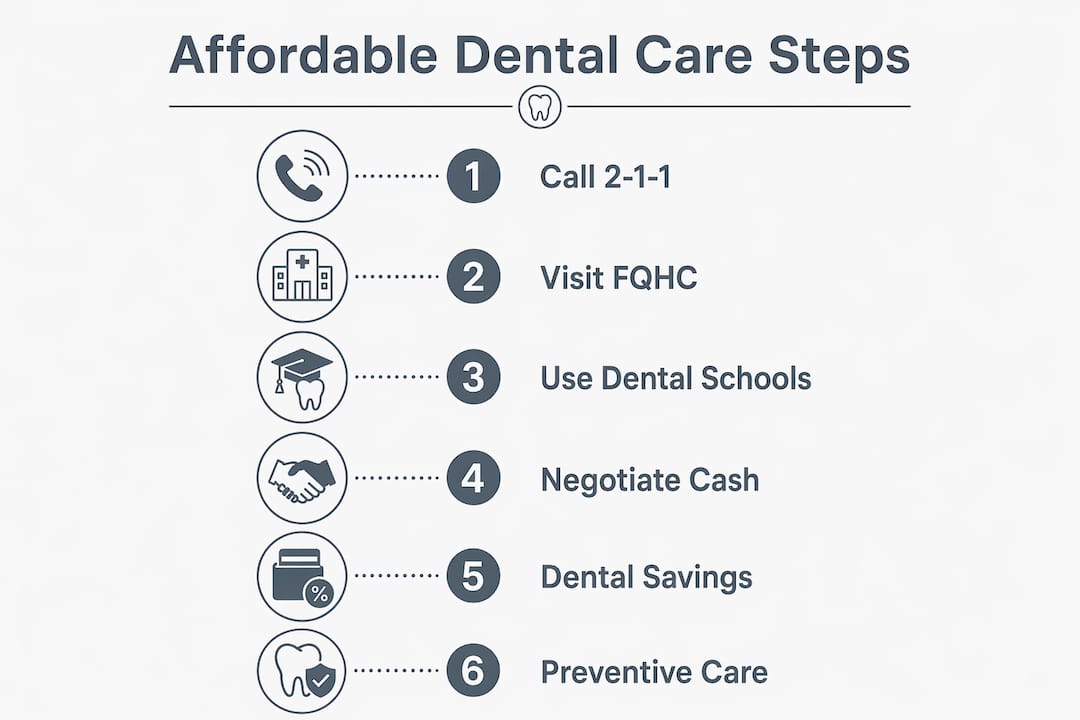
The first move is to call 2-1-1, the national social services hotline. Dialing 2-1-1 connects you to local emergency dental vouchers for free or discounted extractions, often funded through organizations like the Salvation Army. That single call can get you into a chair within days, not weeks.
The second move is to avoid the emergency room. ER visits for dental pain generate bills of $1,000–$2,500 while delivering only temporary relief. ER doctors cannot perform extractions or fillings, so you leave with a prescription and a large bill but no actual dental treatment.
Here are the most effective immediate steps, in order of urgency:
- Call 2-1-1 and ask specifically for emergency dental vouchers or referrals to free dental clinics in your county.
- Search for Mission of Mercy events near you. These free one-day dental events provide extractions, fillings, and cleanings to hundreds of patients at no charge.
- Contact local charitable organizations such as Catholic Charities, United Way, or local community foundations, which sometimes fund emergency dental care directly.
- Check your county health department website for emergency dental programs. Many counties run programs that are not widely advertised.
- Call dental schools in your area and ask about same-week emergency appointments. They often have urgent care slots at deeply reduced rates.
Pro Tip: When you call 2-1-1, use the phrase “emergency dental assistance” rather than “dental pain.” That specific language routes you to the right program faster.
Free dental events like Mission of Mercy are vital for immediate pain relief but cannot substitute for ongoing care. Use them as a starting point, then establish a regular provider relationship through one of the options below.
How do sliding-scale clinics and FQHCs make dental care affordable?
FQHCs are federally funded community health centers required by law to serve patients regardless of ability to pay. These centers serve over 30 million patients annually with fees adjusted to income, often as low as $0–$20 for cleanings and exams at the federal poverty level. That compares to $150–$250 for the same services at a private office.
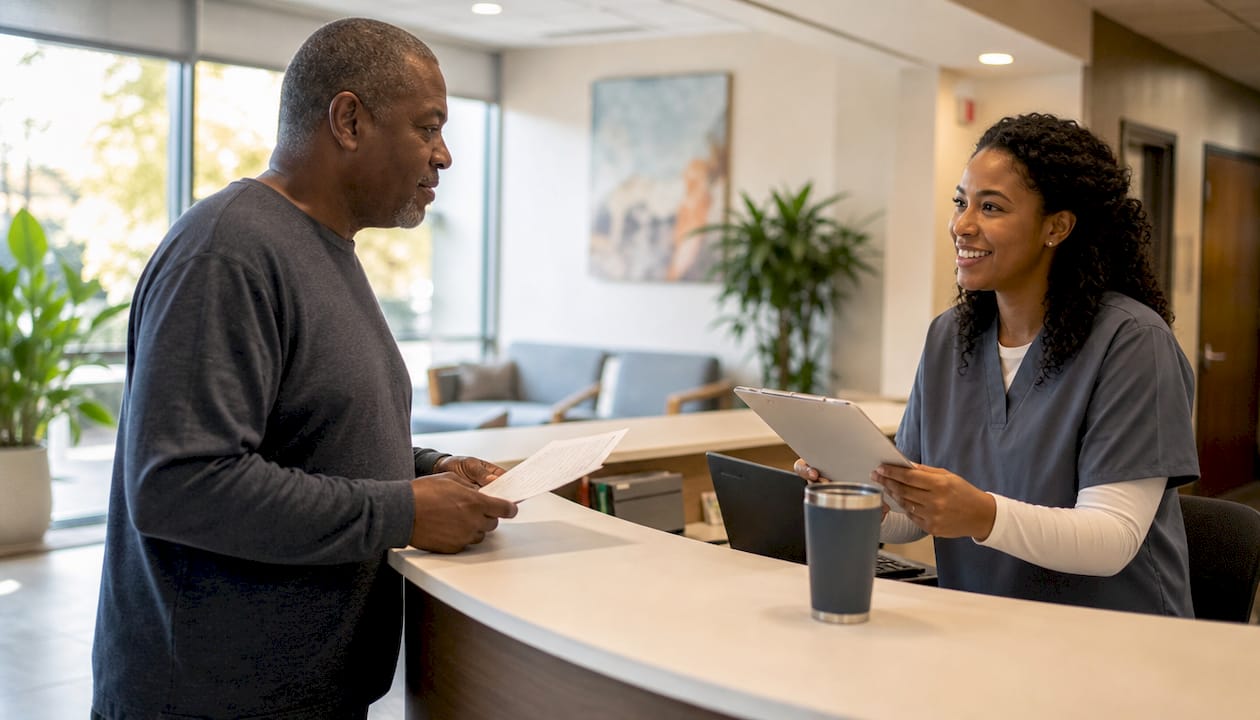
Eligibility is simpler than most people expect. Many FQHCs accept self-attestation for income when you lack formal documentation, meaning you can state your income verbally or in writing without pay stubs or tax returns. That removes one of the biggest barriers people face when seeking care.
Key facts about FQHCs and sliding-scale clinics:
- Sliding-scale fees apply to emergency procedures, not just routine cleanings. You can get an infected tooth treated at an income-adjusted rate.
- No insurance is required. FQHCs serve uninsured patients as their core mission.
- Services are comprehensive. Most FQHCs offer extractions, fillings, root canals, and dentures, not just basic cleanings.
- Locations are widespread. The Health Resources and Services Administration (HRSA) maintains a searchable database at findahealthcenter.hrsa.gov to locate the nearest FQHC.
- Ongoing care is available. Unlike one-day events, FQHCs can become your regular dental home.
Pro Tip: When registering at an FQHC, bring any ID you have, even a library card or utility bill. Staff are trained to work with patients who have limited documentation.
Establishing care at an FQHC is the single most reliable long-term solution for dental care on a budget. The sliding-scale model means your cost adjusts as your income changes, so you never lose access because of a financial setback.
What cost-saving options do dental school clinics offer?
Dental school clinics provide treatments at 40–70% below standard market prices while maintaining quality care through licensed faculty supervision. Every procedure a dental student performs is reviewed and approved by an attending dentist. The care is real, thorough, and safe.
The tradeoff is time. Appointments run longer because students work methodically and faculty must review each step. A filling that takes 45 minutes in a private office may take 90 minutes at a dental school. For patients who need cheap dental solutions and can plan ahead, that tradeoff is well worth it.
| Service | Private office estimate | Dental school estimate | Typical savings |
|---|---|---|---|
| Cleaning and exam | $150–$250 | $40–$80 | 50–65% |
| Tooth-colored filling | $150–$300 | $50–$120 | 50–65% |
| Extraction (simple) | $150–$250 | $50–$100 | 55–70% |
| Root canal (molar) | $900–$1,500 | $300–$600 | 55–65% |
| Full denture (per arch) | $1,500–$3,000 | $500–$1,200 | 55–70% |
To find a dental school clinic near you, search “CODA-accredited dental schools” plus your state. The Commission on Dental Accreditation (CODA) lists all accredited programs. Call the school’s patient clinic directly and ask about new patient intake. Waitlists exist, so call early and get on multiple lists simultaneously.
What financial strategies help manage dental costs with little money?
Negotiating directly with dental offices is more effective than most patients realize. Asking for a cash-pay discount can reduce fees by 10–20% at many private practices. Offices save on credit card processing fees and billing overhead when patients pay cash, and they often pass that savings along when asked directly.
Dental savings plans are a separate tool worth considering. These plans provide discounts of 10–60% without deductibles, waiting periods, or insurance claims. Members pay an annual fee, typically $80–$200, and receive access to pre-negotiated lower rates at participating dentists. For someone needing extensive work, the savings can far exceed the membership cost in the first visit.
Payment plans and healthcare credit cards require careful management. Many dental offices offer payment plans with little to no interest when you ask. Healthcare credit cards like CareCredit offer promotional 0% interest periods, but that rate reverts to high interest if you miss the payoff deadline. Use them only if you have a clear repayment plan. For a full breakdown of financing options, Implantveneerguide’s dental financing guide covers payment structures and risks in detail.
Additional strategies that reduce out-of-pocket costs:
- Get a second opinion before agreeing to expensive procedures. Treatment recommendations vary significantly between providers.
- Ask about phased treatment. Prioritize the most urgent work first and schedule lower-priority procedures over several months.
- Avoid predatory medical loans with interest rates above 20%. These add debt faster than you can pay it down.
- Check state Medicaid dental benefits. Adult dental coverage varies by state, but some states cover extractions, fillings, and emergency care.
Pro Tip: When negotiating a cash discount, ask the front desk, not the dentist. Office managers handle billing and have more flexibility to approve discounts on the spot.
How to layer multiple options to fix rotting teeth on a budget
Combining cost-reduction methods is the most powerful approach available. Patients who layer savings strategies reduce dental costs by 55–65% compared to paying standard private practice rates. No single method achieves that result alone.
A practical example: a patient needing two fillings and an extraction could enroll in a dental savings plan ($150 annual fee), book the procedures at a dental school clinic (40–70% discount), and pay cash (additional 10–15% reduction). The combined effect can turn a $1,200 private-practice bill into under $300.
| Approach | Estimated cost reduction |
|---|---|
| Dental school clinic alone | 40–70% |
| Dental savings plan alone | 10–60% |
| Cash-pay discount alone | 10–20% |
| All three combined | 55–65% |
Preventive care is the final layer. Skipping preventive care leads to exponentially higher treatment costs later. A $40 cleaning at an FQHC prevents a $600 root canal. Once you stabilize your immediate dental crisis, schedule regular cleanings every six months to stop the cycle of escalating damage and cost. Use Implantveneerguide’s cost estimator tool to model what different treatment paths will cost before you commit.
Key Takeaways
Affordable dental care for severe tooth decay is accessible by combining FQHCs, dental school clinics, emergency vouchers, and negotiated discounts to reduce costs by 55–65%.
| Point | Details |
|---|---|
| Call 2-1-1 first | This hotline connects you to local emergency dental vouchers and free clinic referrals immediately. |
| Use FQHCs for ongoing care | Sliding-scale fees as low as $0–$20 make FQHCs the most reliable long-term affordable dental home. |
| Dental schools cut costs 40–70% | Licensed faculty supervise all student work, so quality is maintained at a fraction of private-practice prices. |
| Layer your savings methods | Combining a dental savings plan, dental school care, and cash discounts can reduce costs by 55–65%. |
| Avoid the ER for dental pain | ER visits cost $1,000–$2,500 and provide no actual dental treatment, making them the worst financial choice. |
What I’ve learned from watching people delay dental care
The hardest thing to watch is someone who waited two years because they assumed they had no options, and now needs a full-arch restoration instead of three fillings. Delaying care consistently turns manageable problems into catastrophic ones. Dental disease does not pause while you figure out your finances.
The resources in this article are not theoretical. FQHCs are in every state. Dental schools operate in most major cities. The 2-1-1 hotline works nationwide. The gap between knowing these options exist and actually using them is the only real barrier most people face.
One thing I push back on hard: the idea that the emergency room is a reasonable fallback for dental pain. It is not. You will spend money you do not have, receive no dental treatment, and leave in the same condition you arrived in. That money is better spent on a dental school appointment or an FQHC visit that actually fixes the problem.
The realistic path forward starts with crisis triage, moves to establishing care at a sliding-scale clinic, and builds toward regular preventive visits. That sequence is achievable on almost any income level. The worst outcome is doing nothing and letting an infection spread, which can become life-threatening. Start with the 2-1-1 call today.
— Georgina
Implantveneerguide resources for planning your next dental step
Once your immediate dental crisis is stabilized, the next question is what restorative options make sense for your situation long-term. Implantveneerguide provides evidence-based tools built specifically for patients evaluating implants, veneers, and other restorative procedures after addressing decay.
The dental implant candidacy quiz walks you through clinical and financial factors to determine whether implants are a realistic option for you. The procedures overview covers what each restorative treatment involves, what it costs at accredited clinics, and what outcomes to expect. These tools are free, unbiased, and built with input from licensed dental professionals, so you can plan your treatment path with accurate information rather than guesswork from marketing materials.
FAQ
What is the fastest free dental help available?
Calling 2-1-1 is the fastest route to emergency dental vouchers and free clinic referrals. Mission of Mercy events also provide same-day extractions and fillings at no cost.
Do FQHCs treat dental emergencies, not just routine care?
Yes. FQHCs provide emergency dental services including extractions and infection treatment at sliding-scale fees, often as low as $0 for patients at the federal poverty level.
Are dental school clinics safe for complex procedures?
Dental school clinics are safe for most procedures, including root canals and extractions. Licensed faculty supervise every step, and costs run 40–70% below private practice rates.
What should I avoid when I have teeth pain with no insurance?
Avoid emergency rooms for dental pain. ER visits cost $1,000–$2,500 and provide only temporary relief without any actual dental treatment.
Can I get dental care with no income proof?
Many FQHCs and sliding-scale clinics accept self-attestation for income, meaning you can state your financial situation verbally without providing formal documentation like pay stubs or tax returns.