5 Questions to Get an Accurate Sinus Lift Cost Estimate (U.S.)
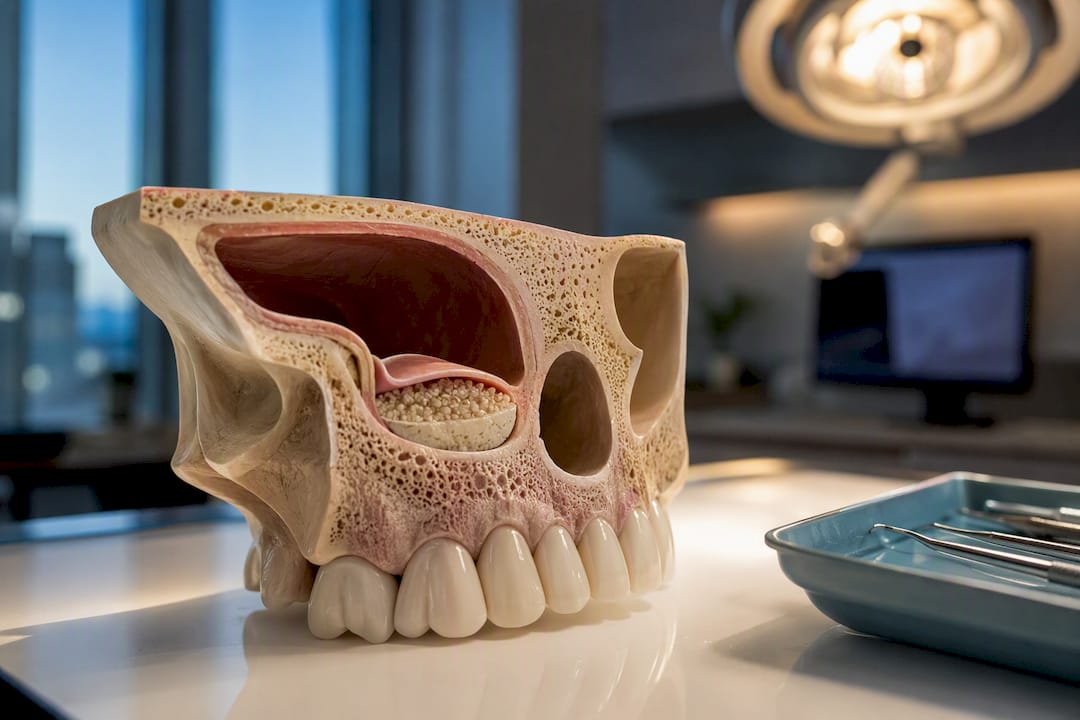
Expect sinus lift costs to vary significantly depending on the technique, with lateral-window approaches generally costing more than crestal ones. Graft material and the eventual implant are typically separate line items, not part of the sinus lift fee itself, so a quote that looks low may just be incomplete.
TL;DR:
- Crestal sinus lifts typically cost between $500 and $1,500 per site, while lateral-window approaches range from $1,500 to $3,000 or more, depending on complexity and location.
- The overall cost depends heavily on the surgical approach, graft material volume, anesthesia level, and whether imaging or additional procedures are included; expect total prices between $2,500 and $7,500 for combined graft and implant.
- Accurate estimates require clarification of what is bundled in the quote, including imaging, graft material, membrane use, sedation, and follow-up, to avoid surprise charges.
- Insurance coverage varies widely based on plan type and coding, with some plans covering portions of grafting, but often requiring preauthorization and clear documentation.
- To get a realistic cost estimate, ask for specific procedure codes, itemized charges, and compare multiple quotes before proceeding with treatment.
Table of Contents
- How Much Does a Sinus Lift Cost by Approach?
- What Factors Affect Sinus Lift Prices?
- What’s Included in a Sinus Lift Quote?
- Does Insurance Cover Sinus Lift Procedures?
- How Long Is Sinus Lift Recovery and What Does It Cost?
- How Do You Get an Accurate Sinus Lift Estimate?
- How Are These Sinus Lift Cost Ranges Calculated?
- Georgina’s Take: Prioritize Technique Over Price Tag
- Plan Your Sinus Lift Budget with the Right Tools
- Sources
How Much Does a Sinus Lift Cost by Approach?
The number you get from a clinic depends almost entirely on which of two surgical techniques your case requires. That single variable explains most of the spread you’ll see between quotes.
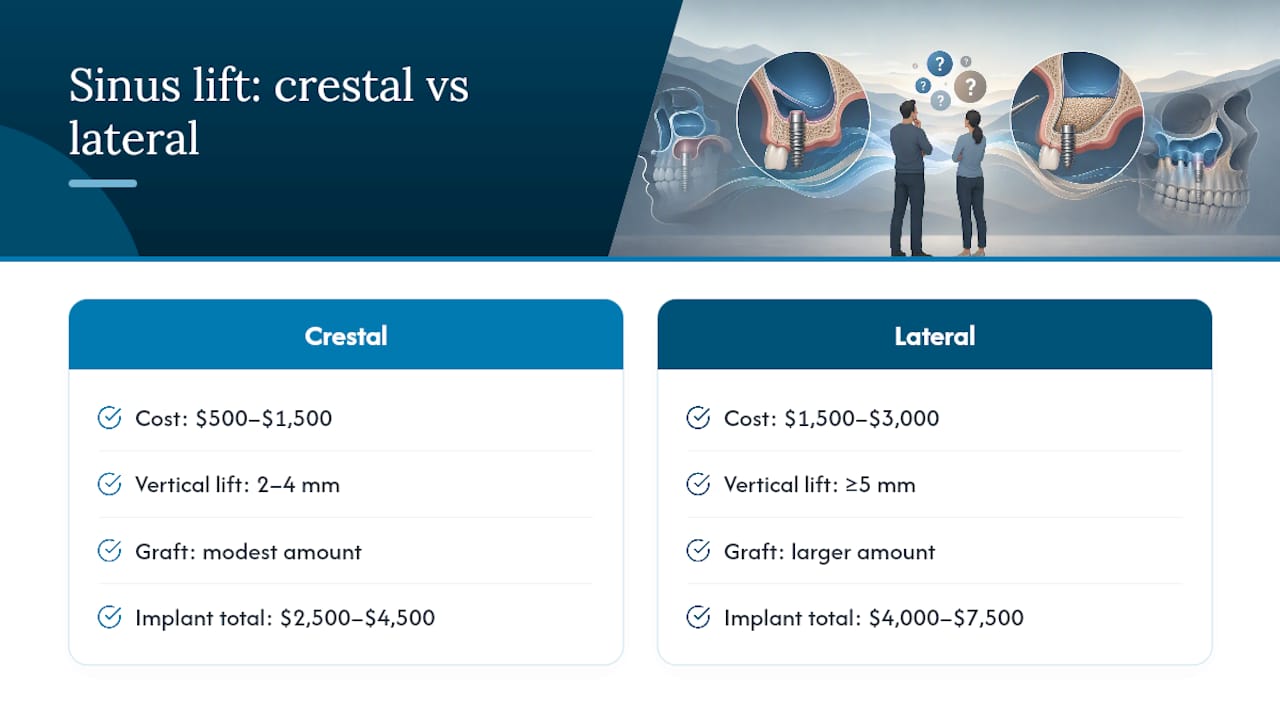
A crestal (osteotome) sinus lift is the smaller, less invasive option, typically running $500 to $1,500 per site. Surgeons use this approach when the sinus floor needs only 2 to 4 millimeters of vertical lift and there’s already decent bone height to work with. It’s often done in the same visit as implant placement, which saves you a separate appointment and sometimes a separate fee.
A lateral-window sinus lift costs more, generally $1,500 to $3,000 per side, because it’s a longer, more technical procedure that opens a small window in the side of the jawbone to lift the membrane and pack in more graft material. Surgeons reach for this when a patient needs major vertical augmentation, usually 5 millimeters or more. Some clinic-published schedules in high-cost metro markets, including Manhattan practices quoting up to $5,000 per side, push well past national norms.
Graft material is frequently billed on its own, and the type you choose moves the number meaningfully:
Put the pieces together and you get a clearer picture of what patients actually pay. A crestal lift plus a single implant often lands between $2,500 and $4,500 total. A lateral-window lift plus implant frequently runs $4,000 to $7,500 once graft material and the implant itself are added in. Need both sides done? Bilateral cases roughly double the sinus lift portion alone, sometimes reaching $3,000 to $6,000 before any implants are placed.
National reference points vary by data source: some aggregators put the average cost between $1,470 and $3,860, while others cite a consumer benchmark near $2,022. Neither number tells you what you’ll pay in your ZIP code, but both confirm the technique you need matters more than which state you’re in.
What Factors Affect Sinus Lift Prices?
Two quotes for what sounds like the same procedure can land thousands of dollars apart. Here’s what’s actually driving that gap:
- Surgical approach: crestal versus lateral window is the single biggest cost lever, as covered above.
- Surgeon specialty: oral surgeons and periodontists with heavy grafting caseloads often charge more than general dentists, but that premium usually buys more predictable outcomes on harder cases.
- Graft volume and material: a small crestal lift needs a fraction of the material a full lateral augmentation does.
- Anesthesia level: local anesthesia alone costs far less than IV sedation or general anesthesia.
- Imaging: a CBCT scan to map sinus anatomy typically adds $150 to $400 if it isn’t bundled into the quote.
- Complication risk: membrane perforations happen in a meaningful share of lateral-window cases and can add repair costs if they occur.
Pro Tip: Ask every clinic whether their quote already includes a CBCT scan. It’s one of the most commonly “surprise” charges patients report after the fact.
What’s Included in a Sinus Lift Quote?
Clinics vary widely in what they bundle into the headline number, which is exactly why two “sinus lift” quotes can differ by thousands. Getting this in writing before you commit protects your budget.
Typically included in the base fee:
- The initial surgical consultation and exam.
- Basic local anesthesia for the procedure.
- Sometimes a standard amount of graft material, though this is inconsistent across practices.
Commonly billed as separate line items:
- CBCT or 3D imaging for surgical planning.
- Collagen membranes used to protect the graft site.
- Graft material beyond a baseline amount.
- Implant placement itself, done as its own procedure.
- Sedation upgrades beyond local anesthesia.
- Prescription medications for pain or infection control.
Ask for the specific CDT procedure codes tied to your quote, along with a written treatment plan. Cost guides that track this closely note that confirming what’s bundled versus billed separately is the single most effective way to avoid billing surprises after surgery.
Does Insurance Cover Sinus Lift Procedures?
Coverage depends heavily on your plan type and how the claim gets coded. Dental PPOs sometimes cover a portion of bone grafting under major services, while HMOs and discount plans rarely do. In some cases, medical insurance steps in if the sinus lift is tied to a covered diagnosis rather than routine implant prep, though that’s the exception rather than the rule.
- Annual maximums matter: a typical dental plan caps benefits around $1,000 to $2,000 per year, and a single sinus lift can burn through most of that in one visit.
- HSA and FSA funds generally qualify for sinus lifts as eligible medical expenses under IRS Publication 502 guidance, which makes itemized billing valuable for tax purposes too.
- Third-party financing (CareCredit and similar) and in-house payment plans are common for the gap insurance doesn’t cover.
- Always request preauthorization in writing before scheduling, since verbal estimates from insurance reps often don’t match the final claim decision.
How Long Is Sinus Lift Recovery and What Does It Cost?
Healing time drives when your implant gets placed, and delays can mean extra visits. Crestal lifts with minor grafting typically heal in 4 to 6 months. Lateral-window procedures with substantial graft volume often need 6 to 9 months before the bone is dense enough to support an implant safely, a timeline consistent with general bone graft healing guidance from NIDCR.
- Simultaneous placement (crestal lift plus implant same day) skips a separate surgical fee but only works for smaller lifts.
- Delayed placement after a lateral window means a second procedure and its own separate implant fee later.
- Postoperative visits, antibiotics, and pain medication typically add a modest amount beyond the surgical fee itself.
- Cleveland Clinic’s patient guidance on bone graft recovery notes swelling and mild discomfort are expected for about a week, with follow-up visits scheduled to confirm healing before any further surgery.
Unexpected costs tend to show up when healing doesn’t go as planned. Membrane perforations or graft failure can require a repeat procedure, so ask upfront how your clinic handles that scenario financially.
How Do You Get an Accurate Sinus Lift Estimate?
A phone call that gets you real numbers instead of a vague range takes about five minutes if you ask the right questions in order.
- Request the specific procedure code being billed (sinus lifts are typically coded separately from implant placement).
- Ask exactly which graft material is being used and whether its cost is included in the quoted fee.
- Confirm imaging, sedation, membrane use, and follow-up visits are itemized rather than bundled into one number.
- Get both a single-side and a bilateral total in writing, along with the expected timeline to implant placement.
- Ask whether the office handles insurance preauthorization directly or if that falls on you.
Pro Tip: Get at least two written estimates for anything beyond a straightforward crestal lift. Lateral-window pricing varies enough between practices that a second opinion often pays for itself.
How Are These Sinus Lift Cost Ranges Calculated?
These figures come from cross-referencing national cost aggregators against clinic-published fee schedules rather than relying on a single source. ToothCostGuide’s procedure-specific breakdown and Pearl’s state-level averages formed the backbone of the ranges above, cross-checked against consumer benchmarks from ThePricer.
- Clinical framing on healing and procedure indications draws on NIDCR and Cleveland Clinic patient resources.
- ZIP-level variation matters enough that a national average alone can mislead you by thousands of dollars.
- Implantveneerguide’s own cost estimator and candidacy checker exist specifically to translate these national bands into something closer to your actual situation.
Georgina’s Take: Prioritize Technique Over Price Tag
The cheapest sinus lift quote in your area is rarely the smartest financial decision. A botched lateral-window procedure that fails and needs redoing costs far more, in money and months, than paying a fair rate for a surgeon who does this regularly. If you’re facing a major augmentation, get a second opinion and insist on seeing your own CBCT imaging before agreeing to anything.
Use HSA or FSA funds where you can, and don’t schedule a single procedure until you have an itemized estimate covering both the sinus lift and the implant that follows it.
— Georgina
Plan Your Sinus Lift Budget with the Right Tools
Generic price ranges only get you so far when your quote depends on your own anatomy, your ZIP code, and which graft material your surgeon recommends. Two free tools are available to help close cost estimate gaps: a cost estimator, which adjusts national ranges based on procedure choices and location, and a candidacy checker, which flags the likely need for a crestal lift, lateral window, or no augmentation before consultation.
Neither tool replaces a clinical exam or a real treatment plan from your surgeon. They’re educational aids designed to help you walk into that consultation already knowing what questions to ask and what range to expect. Run numbers through a cost estimator before booking your first consultation to be informed rather than guessing.
This article is general information, not a substitute for advice from a qualified doctor. Consult a qualified healthcare professional about your own circumstances before acting on anything here.
Sources
- Sinus Lift Surgery Cost — ToothCostGuide
- Sinus Lift Cost — National average & by state | Pearl
- How Much Does A Dental Sinus Lift Cost? — ThePricer
- National Institute of Dental and Craniofacial Research
- Dental bone graft — Cleveland Clinic