Are Veneers Permanent? Lifespan, Risks, and What to Expect

Dental veneers are defined as thin shells of porcelain or composite resin bonded to the front surface of teeth to improve their appearance. They are not permanent in the traditional sense, but the procedure is irreversible. Getting veneers means your dentist removes 0.3 to 0.7 mm of enamel, and since enamel does not regenerate, your teeth will always require a restoration after that point. The veneers themselves typically last 10–20 years depending on material and care, but the commitment to ongoing restorations lasts a lifetime.
Are veneers permanent, and what does that actually mean?
The word “permanent” causes real confusion here. Veneers are not reversible because the enamel removed during preparation cannot grow back. That is the permanent part. The veneers themselves, however, are designed to be replaced after a decade or two. Think of it this way: the tooth alteration is permanent, but the restoration sitting on top of it is not.
Clinically, dentists distinguish between three terms that patients often use interchangeably. “Permanent” typically means something that lasts forever. “Irreversible” means a change that cannot be undone. “Durable” means something built to last a long time. Veneers are irreversible and durable. They are not permanent in the forever sense. Understanding this distinction before you commit to treatment is one of the most important steps you can take.
Veneers also create what prosthodontists call a lifelong maintenance liability. Once your enamel is removed, your teeth will always need some form of restoration. That is not a reason to avoid veneers. It is a reason to go in with clear expectations.
What tooth preparation involves and why it matters
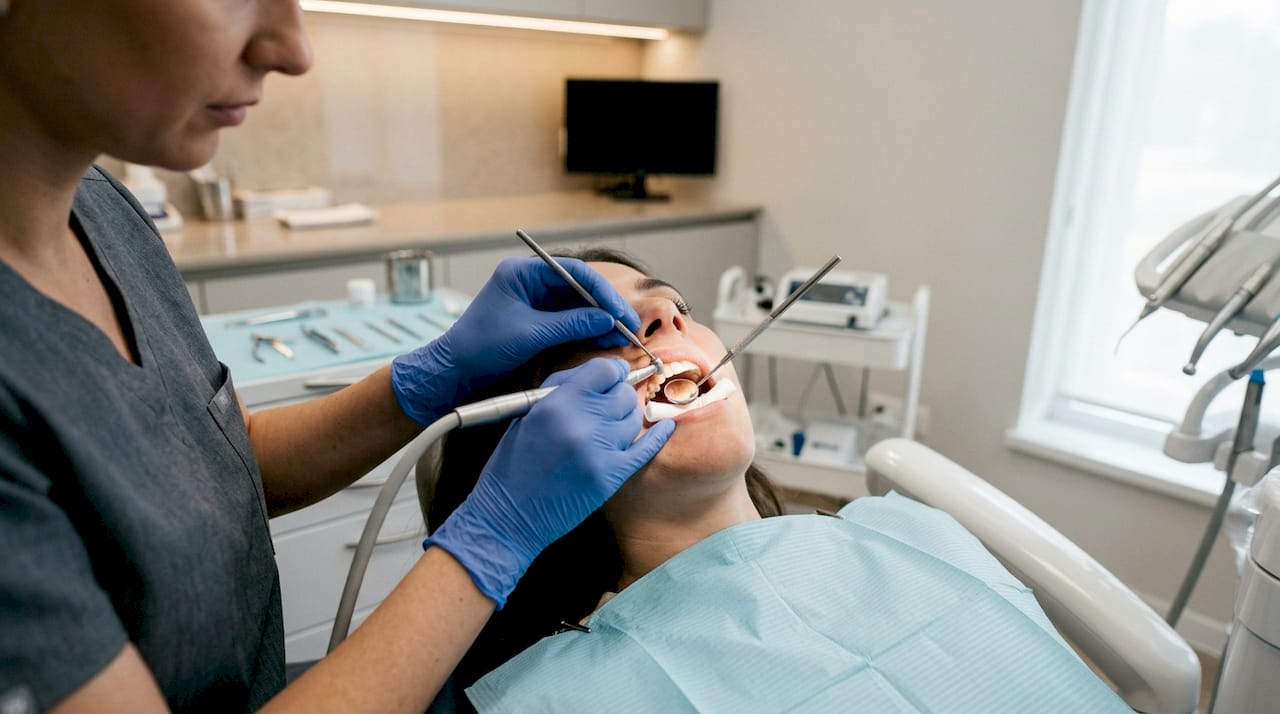
Traditional veneer preparation removes a thin layer of enamel from the front of each tooth. The standard removal depth is 0.3 to 0.7 mm. That may sound small, but it is enough to change the tooth’s structure permanently.
The depth of preparation directly affects two things: bonding strength and long-term veneer survival. Enamel bonds more strongly to resin cement than dentin does. When more enamel is preserved, the veneer adheres better and lasts longer. Minimal-prep veneers preserve more enamel, which strengthens the enamel-dentin bond and improves long-term outcomes.
Here is what preparation typically involves:
- Enamel reduction: The dentist shaves 0.3–0.7 mm from the tooth surface using a rotary instrument.
- Impressions or digital scans: These capture the exact shape of the prepared tooth for the lab or CAD/CAM milling machine.
- Temporary veneers: Placed while the permanent ones are fabricated, usually over one to two weeks.
- Bonding appointment: The final veneers are cemented using resin cement and cured with a UV light.
Pro Tip: Ask your dentist specifically about minimal-prep or no-prep veneer options before committing to traditional preparation. Not every patient qualifies, but those who do can preserve significantly more enamel, which pays off in stronger bonding and a longer veneer lifespan.
The type of preparation your dentist uses also affects what happens when veneers eventually need replacement. Teeth with more remaining enamel have more options. Teeth that were aggressively prepped may require crowns rather than a second set of veneers.
How long do veneers last? Comparing porcelain, composite, and other types
Veneer lifespan varies significantly by material. Porcelain veneers are the clinical gold standard. They carry a survival rate of approximately 95% at 5 years and between 90–96% at 10 years. Many last 15–20 years with proper care. That is strong performance for any cosmetic restoration.
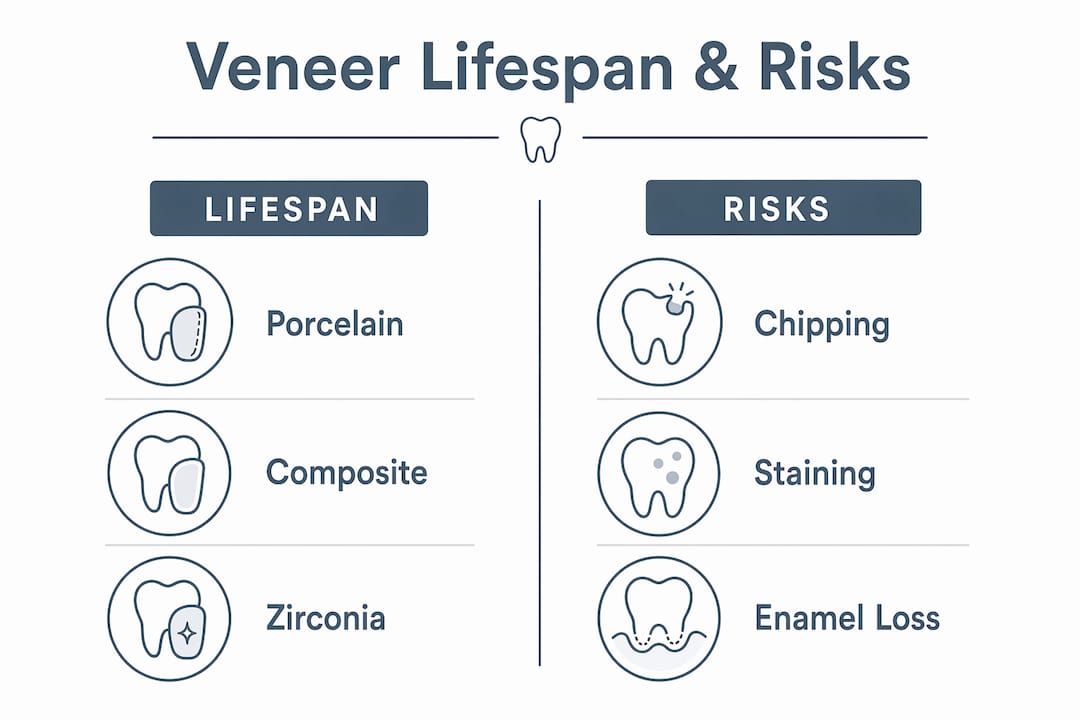
Composite veneers are more affordable but less durable. They typically last 5–7 years and are more prone to staining and chipping than porcelain. They work well for patients who want a lower-cost entry point or who are not ready for the full commitment of porcelain.
| Veneer type | Typical lifespan | Chip resistance | Stain resistance |
|---|---|---|---|
| Porcelain | 15–20 years | High | High |
| Composite resin | 5–7 years | Moderate | Low |
| Laminate (no-prep) | 10–15 years | Moderate | High |
| Zirconia | 15–25+ years | Very high | Very high |
Zirconia veneers represent the newest category with the highest durability potential. They are thicker than porcelain and require slightly more tooth reduction, but their fracture resistance is significantly greater. Laminate veneers, often marketed as no-prep options, sit in the middle range. They last 10–15 years but are slightly more fragile because they bond to less surface area.
One finding that surprises many patients: veneer failure often results from esthetic or dimensional issues rather than structural breaking. Patients frequently request replacement because they want a different shape or shade, not because the veneer has cracked. This means the clinical lifespan of a veneer can exceed the patient’s personal satisfaction timeline.
You can compare veneer materials in depth to understand how manufacturing method also affects durability.
What factors influence how long veneers last?
Material choice sets the ceiling for veneer lifespan. Patient habits and dental care determine whether you reach that ceiling or fall well short of it.
Bruxism is the single biggest threat to veneer longevity. Patients who grind their teeth and skip night guards can reduce veneer lifespan from 15–20 years down to 5–10 years. The repetitive mechanical stress fractures the ceramic or wears through the composite faster than normal chewing ever would. A custom night guard is not optional for grinders. It is a clinical requirement.
Other factors that directly affect how long veneers last include:
- Oral hygiene: Poor hygiene leads to gum recession and decay at the veneer margins, which causes failure even when the veneer itself is intact.
- Diet: Biting hard foods like ice or hard candy chips veneers. Acidic foods and drinks weaken the bonding cement over time.
- Dentist skill and bonding protocol: Advanced placement protocols including moisture control, resin cement selection, and follow-up visits can improve survival by up to a decade.
- Bite alignment: Patients with a deep overbite place more stress on front veneers. Orthodontic correction before veneer placement can extend lifespan significantly.
- Cosmetic preferences: Some patients replace veneers early simply because they want a different look. This is a personal choice, not a clinical failure.
Pro Tip: If you grind your teeth, get a sleep study or at least a bite assessment before committing to veneers. Unmanaged bruxism will shorten your veneer lifespan regardless of material quality. Treating the underlying habit first protects your investment.
Patients who want a deeper look at bruxism and veneer durability will find that the relationship between grinding and veneer failure is well-documented and largely preventable.
What happens when veneers wear out, and are veneers reversible?
Veneers are not reversible. Once enamel is removed, the tooth requires a restoration permanently. Removing a veneer does not restore the original tooth. It exposes a prepared surface that needs to be covered again.
When veneers reach the end of their lifespan, here is what the replacement process typically involves:
- Assessment: Your dentist evaluates the remaining tooth structure, the condition of the bonding, and whether the margins show decay or gum recession.
- Removal: The old veneer is carefully removed using a rotary instrument. This process can remove additional enamel if the original prep was shallow.
- Re-preparation: If enough enamel remains, a new veneer is fabricated and bonded. If the tooth has been significantly altered, a crown may be the better option.
- Composite protection: In cases where a patient wants to stop wearing veneers, composite resin restorations can cover the prepared surface and protect it from sensitivity and decay.
Replacing veneers at the end of their life is not a failure. It is expected maintenance, similar to replacing a car’s brake pads. Underlying teeth remain intact with minimal prep, which allows repeated restorations over a lifetime.
The key point is this: the teeth after veneers are removed will always look different from the original tooth. They will be slightly smaller and more sensitive. Patients who understand this before treatment make more confident decisions and report higher long-term satisfaction.
Implantveneerguide covers the full picture of veneer risks and complications for patients who want to understand every scenario before committing.
Key Takeaways
Veneers are irreversible because enamel removal is permanent, but the veneers themselves require replacement every 10–20 years, making them a long-term cosmetic commitment rather than a one-time procedure.
| Point | Details |
|---|---|
| Enamel removal is irreversible | Veneers permanently alter tooth structure, requiring ongoing restorations for life. |
| Porcelain outlasts composite | Porcelain veneers survive 15–20 years; composite veneers typically last only 5–7 years. |
| Bruxism shortens lifespan sharply | Untreated grinding can cut veneer lifespan from 20 years down to as few as 5. |
| Bonding quality matters greatly | Advanced placement protocols can extend veneer survival by up to a decade. |
| Replacement is expected, not failure | Veneers are designed for replacement cycles; teeth with minimal prep support multiple rounds. |
Why patients misunderstand veneer permanence more than any other dental topic
I have spent years reviewing clinical literature on cosmetic dentistry, and the veneer permanence question comes up more than almost any other. The confusion is understandable. Dentists sometimes use “permanent” loosely to mean “not temporary,” and patients hear “forever.” Those are very different things.
What I have noticed is that patients who go into veneer treatment with clear expectations about lifespan and replacement tend to be far more satisfied over the long term. They are not blind sided when their dentist recommends replacement at year 15. They have already planned for it financially and emotionally. The patients who struggle are the ones who believed veneers were a one-and-done solution.
The other thing I would push back on is the idea that veneer chips are automatically a crisis. Minor chips can often be polished or repaired without full replacement. Clinical failure is defined strictly by the need for removal or replacement, not by every small surface imperfection. Patients who understand this distinction avoid unnecessary panic and unnecessary costs.
My honest recommendation: treat veneers as a major cosmetic investment with a 15-year planning horizon. Budget for replacement. Use a night guard if you grind. See your dentist twice a year to catch margin issues early. That approach gives you the best shot at reaching the top end of the lifespan range, and it keeps your options open when replacement time comes.
— Georgina
Planning your veneer treatment with evidence-based guidance
Choosing veneers is a significant decision that deserves more than a single consultation. Implantveneerguide provides evidence-based resources built with dental professionals to help you understand every stage of the process, from candidacy to long-term care.
Start with the candidacy quiz to assess whether veneers or implants are the right fit for your situation. The quiz draws on clinical criteria to give you a clear, unbiased starting point. From there, the procedures overview walks you through what each treatment involves, what to expect during recovery, and how to evaluate providers. Implantveneerguide does not sell treatments. It gives you the information you need to make a confident, well-informed decision before you sit in the dental chair.
FAQ
Are veneers permanent or temporary?
Veneers are neither fully permanent nor temporary. The enamel removal required for placement is irreversible, but the veneers themselves typically last 10–20 years before needing replacement.
Can veneers be removed and teeth returned to normal?
No. Once enamel is removed during veneer preparation, the tooth cannot be restored to its original state. Removing veneers exposes a prepared surface that requires ongoing restoration.
How long do porcelain veneers last compared to composite?
Porcelain veneers last 15–20 years with a clinical survival rate of 90–96% at 10 years. Composite veneers last 5–7 years and are more prone to staining and chipping.
Do veneers chip easily?
Porcelain and zirconia veneers resist chipping well under normal use. Composite veneers chip more easily, especially when patients bite hard foods or have untreated bruxism.
What happens to teeth after veneers are removed?
Teeth after veneers are removed are smaller, more sensitive, and permanently altered. They require a new restoration, either a replacement veneer or a dental crown, to remain protected and functional.