Dental Implants Ruined My Life: What Patients Need to Know

Dental implant failure is defined clinically as the loss of osseointegration, the biological bond between the titanium post and the jawbone, and it affects a meaningful share of patients despite an overall success rate exceeding 95%. When that bond breaks down, or when complications like peri-implantitis, nerve damage, or chronic infection take hold, the consequences reach far beyond the mouth. If you have searched “dental implants ruined my life,” you are not alone, and your experience is not an exaggeration. This article explains what goes wrong, why it happens, and what you can do about it.
What are the most common complications that follow dental implant procedures?
Peri-implantitis affects about 45% of implant patients over a nine-year follow-up period. That figure means nearly half of all long-term implant patients develop a progressive infection around the implant that destroys the surrounding bone if left untreated.
The condition begins as peri-implant mucositis, a reversible inflammation of the soft tissue. Without treatment, it advances to peri-implantitis, where bone loss becomes irreversible. Patients often do not notice the early stage because it causes little pain, which is exactly what makes it so dangerous.
Osseointegration failure is a separate problem. The implant never fuses properly with the bone, or it fuses and then loosens months or years later. Patients describe the sensation as a tooth that rocks or feels hollow when biting. This requires removal and a full restart of the process.
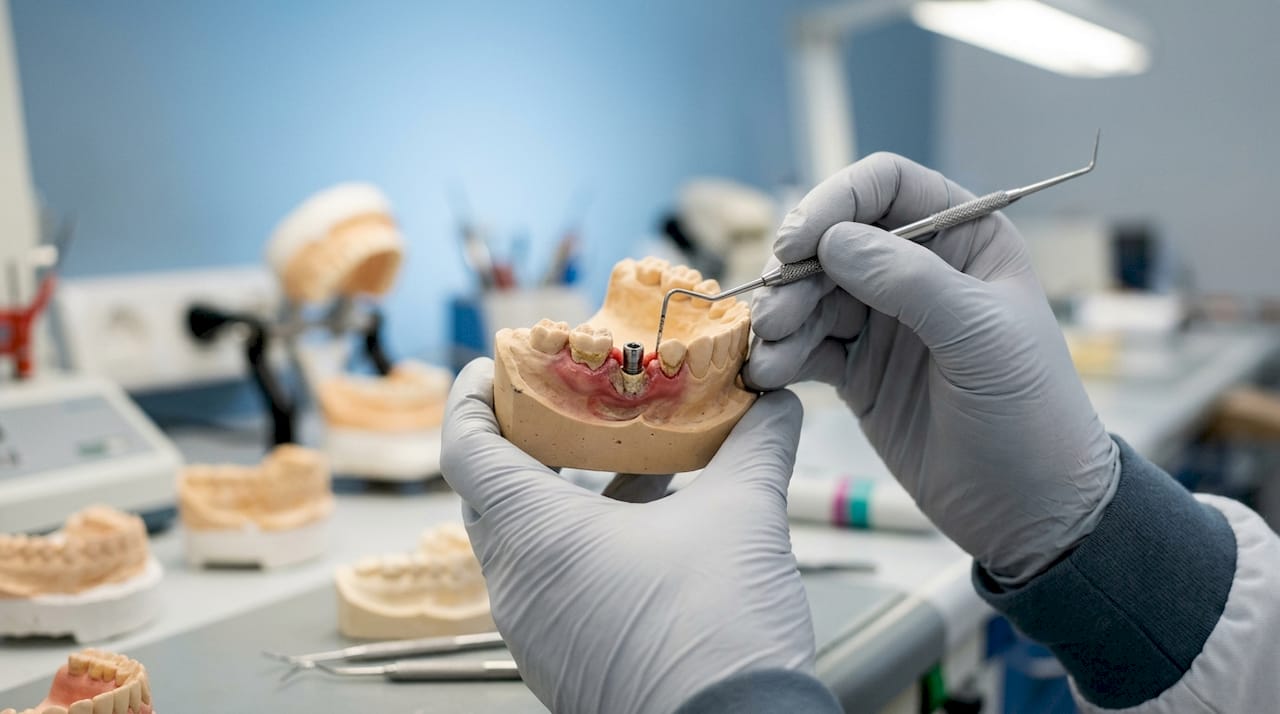
Nerve damage during lower jaw implants is rare but can be permanent. The inferior alveolar nerve, which runs through the lower jaw, controls sensation in the lip, chin, and gum. An implant placed too close to it causes numbness, tingling, or burning that some patients live with for years.
Other documented complications include:
- Mechanical failures: Crown loosening, abutment fractures, and implant body fractures
- Sinus perforation: Upper jaw implants placed too close to the sinus cavity
- Bone loss: Progressive resorption that changes facial structure over time
- Chronic infection: Persistent bacterial colonization at the implant site
Risk factors that raise the probability of all these complications include smoking, poorly controlled diabetes, osteoporosis, autoimmune conditions, and inadequate oral hygiene. Patients with periodontitis history carry a significantly elevated baseline risk.
How do dental implant complications affect life physically and emotionally?
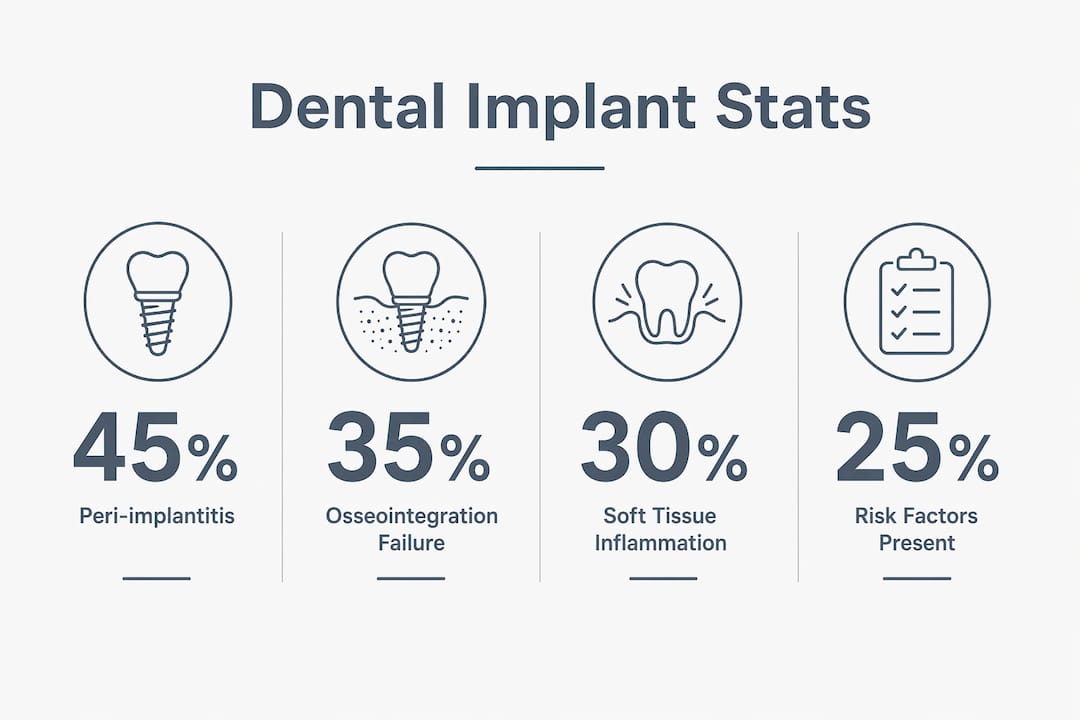
Bone loss and chronic infection do not stay contained to the jaw. Failed implants can alter facial structure and require complex multi-stage surgeries that stretch recovery timelines to 12 months or longer. Patients report difficulty chewing, changes in speech, and visible changes to the shape of their face.
Nerve damage creates a different category of suffering. Persistent numbness in the lip or chin affects how patients speak, smile, and express emotion. Some describe feeling disconnected from their own face. These are not minor inconveniences.
“The emotional consequences of failed implants are often overlooked. Comprehensive care requires addressing mental health through counseling and peer support to restore confidence and quality of life.” — BBC News, patients’ emotional toll from dental implant failure
The financial damage compounds the physical pain. Patients who received poor-quality implants abroad, particularly through dental tourism, face corrective treatment costs of $34,000 to $40,000. That figure often represents ten times what they originally paid for the discounted procedure. The debt, combined with ongoing health crises, pushes many patients into anxiety and depression.
The psychological effects are real and documented. Patients describe loss of self-worth, social withdrawal, and a persistent sense of betrayal by a procedure they trusted. Mental health support is not optional in these cases. It is a necessary part of recovery alongside physical treatment.
Why do dental implants fail or cause severe problems?
Failed osseointegration is the root cause of most serious implant problems. It happens when the bone does not bond to the titanium post, and several factors drive that failure.
- Poor bone quality or quantity: Patients with low bone density, including those with osteoporosis, provide less surface area for the implant to anchor. Bone grafting can address this, but it adds months to the timeline and its own set of risks.
- Premature loading: Placing a crown on an implant before osseointegration is complete disrupts the bonding process. This is a surgical planning error, not a patient error.
- Surgical positioning errors: An implant placed at the wrong angle or depth can impinge on nerves, perforate the sinus, or fail to engage adequate bone.
- Systemic health conditions: Poorly controlled diabetes significantly increases implant failure rates by impairing blood flow and the body’s ability to heal. Clinicians now require HbA1c levels to be within a safe range before proceeding. Patients can review the connection between HbA1c and healing outcomes before making any surgical decision.
- Smoking: Smoking reduces blood flow and healing capacity, raising both failure and infection risk. Cessation before and after surgery is not a suggestion. It is a clinical requirement for acceptable outcomes.
- Inadequate follow-up: Patients who skip post-operative appointments miss the early warning signs that are still reversible.
Modern digital 3D imaging and guided surgical techniques reduce the risk of nerve injury and mispositioning significantly. Confirming that your surgeon uses these tools before consenting to surgery is one of the most protective steps a patient can take.
Pro Tip: Ask your surgeon specifically whether cone beam computed tomography (CBCT) imaging is part of your treatment plan. If it is not, ask why. This single question can prevent the most severe surgical errors.
What can patients do after experiencing implant complications?
Recognizing warning signs early is the most powerful thing you can do. Persistent pain, bad taste, or mobility around an implant require immediate specialist evaluation. These symptoms are not normal healing. They signal active damage that worsens with every week of delay.
Early-stage complications respond well to non-surgical treatment:
- Antibiotics and antiseptic rinses to control bacterial infection
- Mechanical debridement to clean the implant surface and surrounding tissue
- Improved home hygiene using interdental brushes and water flossers around implant sites
- Laser therapy in some specialist practices to decontaminate the implant surface
Severe cases require a different approach. Bone grafting can rebuild lost tissue, but it only works when infection is fully cleared first. Implant removal followed by a healing period and eventual replacement is sometimes the only viable path. In cases where the patient cannot or does not want another implant, removable partial dentures or implant-supported bridges offer functional alternatives.
Choosing the right specialist matters enormously. Prosthodontists specialize in restoring damaged or failed dental work. Periodontists manage the gum and bone disease that drives peri-implantitis. Oral surgeons handle complex removal and grafting cases. A team approach produces better outcomes than a single generalist.
Patients who received overseas implants face an additional barrier: local dentists often decline to treat complex cases from abroad. Seeking a specialist at a dental school or academic medical center increases the chance of finding a provider willing to take on difficult revision cases.
Pro Tip: Always get a second opinion before agreeing to revision surgery. The treatment plan for a failed implant varies widely between practitioners, and the stakes are too high to accept a single assessment.
Mental health support belongs in the treatment plan. Counseling and peer support groups for patients with dental trauma exist and make a measurable difference in recovery. Do not wait until physical treatment is complete to address the emotional toll.
How can you prevent dental implant failure and complications?
Prevention starts before surgery, not after. A thorough pre-surgical assessment covers bone density, gum health, systemic conditions, and current medications. Patients with autoimmune conditions or low bone density need specialist clearance before any implant procedure begins.
Key prevention strategies include:
- Systemic health management: Bring diabetes, blood pressure, and autoimmune conditions under control before surgery. Clinicians use HbA1c thresholds as a go/no-go criterion for diabetic patients.
- Smoking cessation: Stop smoking at least three months before surgery and maintain cessation through the healing period.
- Surgeon credentials: Verify board certification and ask specifically about implant case volume. Experience with complex cases reduces error rates.
- Digital surgical planning: Confirm that CBCT imaging and guided implant placement are part of the plan.
- Post-operative hygiene: Follow the specific cleaning protocol your surgeon provides. Generic advice is not enough for implant sites.
- Regular maintenance: Routine checkups and professional cleaning every 3–6 months catch peri-implantitis at the reversible stage.
- Know the red flags: Pain, swelling, bleeding, looseness, or a bad taste around an implant at any point after surgery requires same-week evaluation, not a wait-and-see approach.
Patients who are still deciding whether implants are right for them can use Implantveneerguide’s candidacy screening tool to evaluate their personal risk profile before committing to a consultation.
Key Takeaways
Dental implant complications are real, documented, and life-altering for a significant subset of patients, but early recognition, specialist care, and mental health support together form the most effective path to recovery.
| Point | Details |
|---|---|
| Peri-implantitis is widespread | About 45% of implant patients develop this bone-destroying infection over nine years. |
| Warning signs demand urgent action | Persistent pain, looseness, or bad taste require specialist evaluation within days, not weeks. |
| Systemic health drives outcomes | Uncontrolled diabetes and smoking are the two most modifiable risk factors for implant failure. |
| Revision care is complex and costly | Corrective treatment after failed implants can cost $34,000 to $40,000 and take over a year. |
| Mental health is part of recovery | Counseling and peer support are clinically necessary alongside physical treatment for failed implants. |
What I’ve learned from years of covering implant complications
When someone says dental implants ruined my life, the instinct in clinical circles is to reach for statistics about high success rates. That instinct is wrong. A 95% success rate means nothing to the patient sitting in the 5%. And the complications that do occur are not minor. They are life-altering in ways that the dental industry has been slow to acknowledge.
What I have seen consistently is that the patients who fare worst are those who were not given a complete picture before surgery. They were told about the success rate. They were not told about peri-implantitis, nerve damage, or what revision surgery actually involves physically and financially. Informed consent in implant dentistry still has a long way to go.
The other pattern I keep seeing is the gap between physical and psychological care. Patients spend months managing infections and bone grafts, and nobody asks how they are doing emotionally. The research is clear that the emotional toll of implant failure is severe and often undertreated. That needs to change.
My honest advice: if you are already in this situation, find a prosthodontist or periodontist who has seen complex revision cases before. Do not let a general dentist manage a failed implant alone. And please, do not skip the mental health piece. Recovery from this experience is not just physical.
Technology is genuinely improving outcomes. Digital planning, CBCT imaging, and guided surgery are reducing the most catastrophic errors. The patients who will benefit most are those who ask the right questions before they ever sit in the surgical chair.
— Georgina
Resources at Implantveneerguide for patients dealing with implant challenges
Implantveneerguide publishes evidence-based guides built with dental professionals, specifically for patients navigating the complex decisions around implants and restorations.
If you are still assessing whether implants are right for you, or whether a revision procedure makes sense, the implant candidacy checker walks through your personal risk factors in a structured, clinical format. For patients managing the financial side of corrective care, the cost estimator tool provides realistic US cost ranges for implants and associated procedures. The risks and complications guide covers the full spectrum of what can go wrong and what the evidence says about each scenario. All resources are free, unsponsored, and grounded in peer-reviewed research.
FAQ
What does peri-implantitis mean and is it serious?
Peri-implantitis is a bacterial infection around a dental implant that destroys the surrounding bone. It affects about 45% of implant patients over nine years and can lead to implant loss if not treated early.
Can nerve damage from dental implants be permanent?
Yes. Nerve damage during lower jaw implant placement can cause permanent numbness or tingling in the lip, chin, or gum. Modern 3D imaging reduces this risk, but it cannot eliminate it entirely.
What should I do if my dental implant feels loose or painful?
Persistent pain, mobility, or a bad taste around an implant are red flags that require specialist evaluation within days. Early intervention prevents irreversible bone and tissue loss.
Is it worth getting a second opinion after implant complications?
A second opinion before revision surgery is strongly recommended. Treatment plans for failed implants vary significantly between practitioners, and the financial and physical stakes of the wrong choice are high.
How much does it cost to fix a failed dental implant?
Corrective treatment after failed implants, particularly those placed abroad, can cost between $34,000 and $40,000 in the United States. Costs depend on the extent of bone loss, infection, and the number of procedures required.