Surgical Guide Dental Implants: A Patient’s Complete Guide
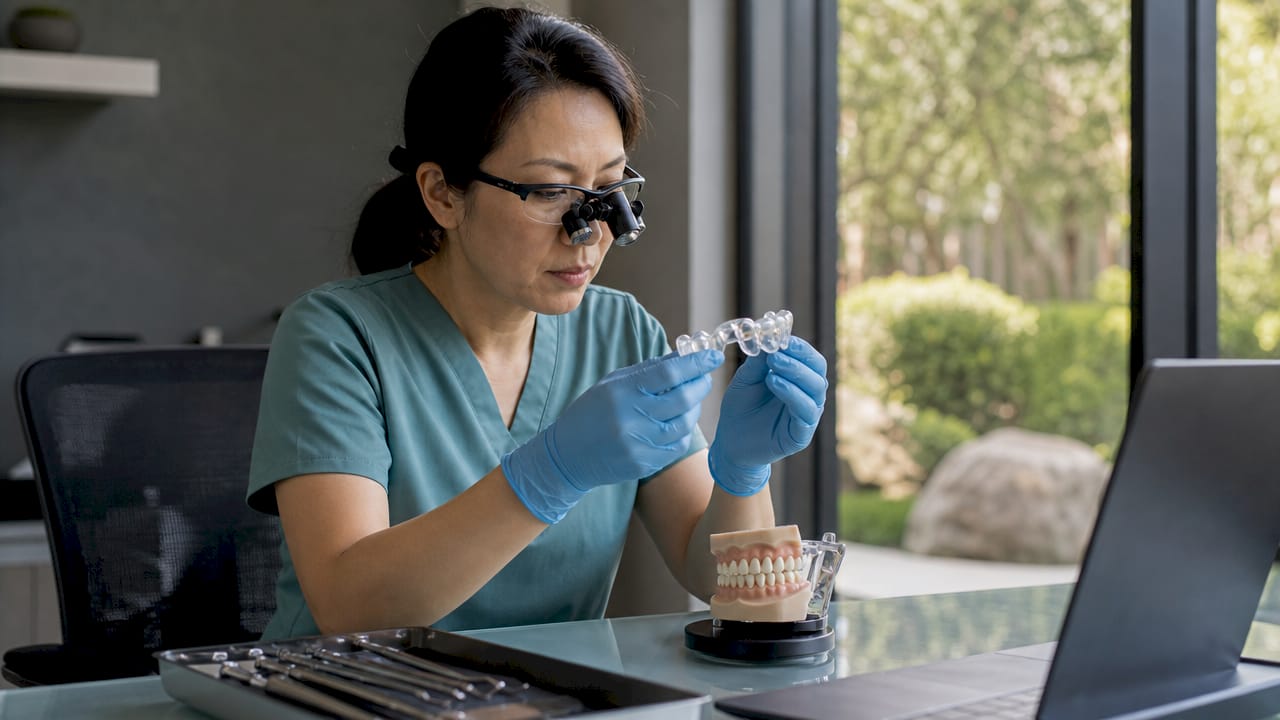
A surgical guide for dental implants is a custom-fabricated device that constrains implant position, angle, and depth during surgery based on a precise digital plan. Without one, a surgeon places implants freehand, accepting angular deviations of 4–6 degrees and coronal positional errors of 1–2 mm. With a surgical guide, those numbers drop to 1.5–3 degrees and 0.5–1 mm. That difference determines whether your final crown fits perfectly or requires costly restorative corrections. Implantveneerguide covers the full picture here, from guide types to surgical steps to realistic recovery expectations, so you can walk into your consultation prepared.
What are surgical guide dental implants and how do they work?
A surgical guide transfers the accuracy of digital planning directly into your mouth during the procedure. Your surgeon designs the implant position on a computer using a cone-beam CT scan and intraoral scans, then fabricates a physical template that locks that plan in place during surgery. The guide contains metal sleeves that channel the drill to the exact planned angle and depth, removing guesswork from the most critical moment of the procedure.
Angular deviations over 3–4 degrees force complex restorative compensations that raise costs and compromise esthetics. A well-made guide eliminates most of that risk. The industry term for this approach is static computer-guided implant surgery, which distinguishes it from dynamic navigation systems that track instruments in real time. Both improve outcomes, but static guides are far more common in everyday clinical practice.
What types of surgical guides are used for dental implants?
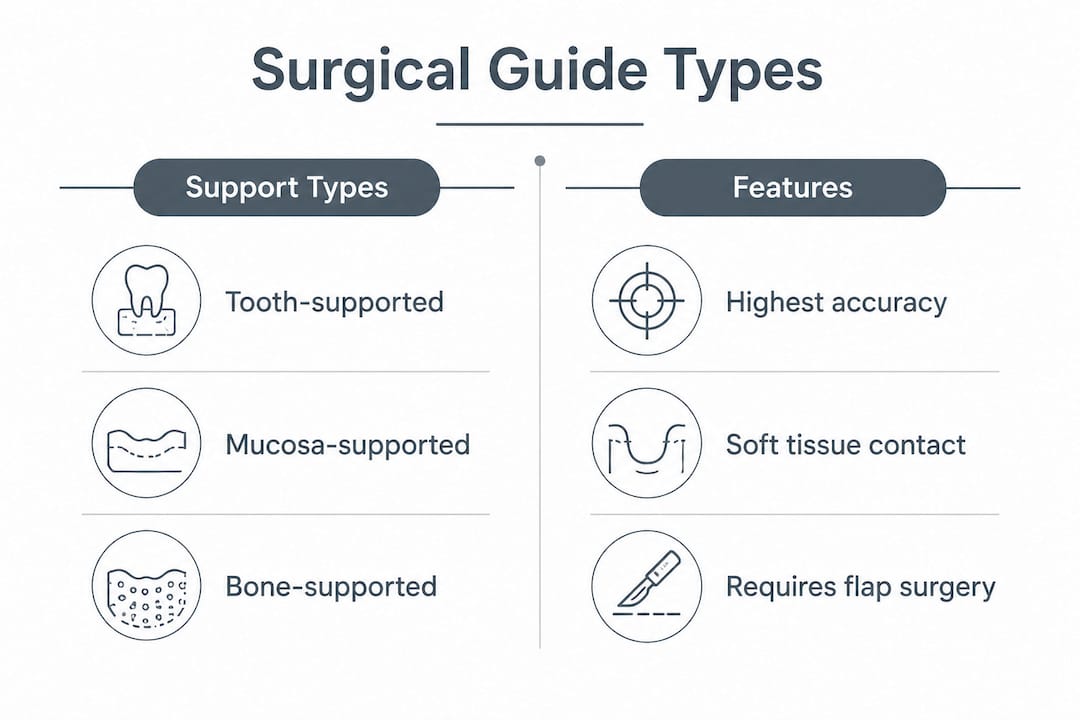
Three support types define how a guide sits in your mouth, and each has a distinct accuracy profile.
Tooth-supported guides rest on your remaining natural teeth. They deliver the highest positional accuracy because teeth provide a rigid, stable foundation. A published study found tooth-supported guides achieve a mean 3D deviation of 0.2953 mm, making them the preferred choice for patients with partial tooth loss.
Mucosa-supported guides rest on the soft tissue of an edentulous (toothless) jaw. Soft tissue compresses and shifts under pressure, which causes the guide to move during drilling. This movement reduces accuracy, particularly in the mandible. Mucosa-supported guides are used when no teeth remain, but they require extra care from the surgeon to manage positional drift.
Bone-supported guides require the surgeon to reflect a flap of gum tissue and anchor the guide directly to bone. This eliminates soft tissue compression entirely. Research on bone-supported stackable systems shows a mean angular deviation of 1.25 degrees, making them the most stable option for full-arch and complex cases.
| Guide type | Support surface | Best clinical use | Key limitation |
|---|---|---|---|
| Tooth-supported | Remaining teeth | Partial edentulism | Requires stable teeth |
| Mucosa-supported | Soft tissue | Fully edentulous patients | Lowest accuracy |
| Bone-supported | Exposed bone | Full-arch, complex cases | Requires flap surgery |
Pro Tip: Ask your surgeon which guide type they plan to use and why. The answer tells you a lot about how thoroughly they have planned your case.
What tools and steps are needed to prepare for guided implant surgery?
Guided implant surgery depends on a precise digital workflow before a single drill touches bone. The preparation phase is where accuracy is either built in or lost.
- Cone-beam CT scan (CBCT): This 3D X-ray maps your bone volume, density, and the location of critical structures like the inferior alveolar nerve and sinus floor.
- Intraoral scan: A digital impression of your teeth and gums creates the prosthetic reference that guides implant positioning.
- CAD/CAM software planning: Your surgeon or a lab technician uses specialized software to place virtual implants based on the prosthetic outcome, not just bone availability.
- Guide fabrication: The finalized plan drives either a 3D printer or a milling machine to produce the physical guide from biocompatible resin or PMMA.
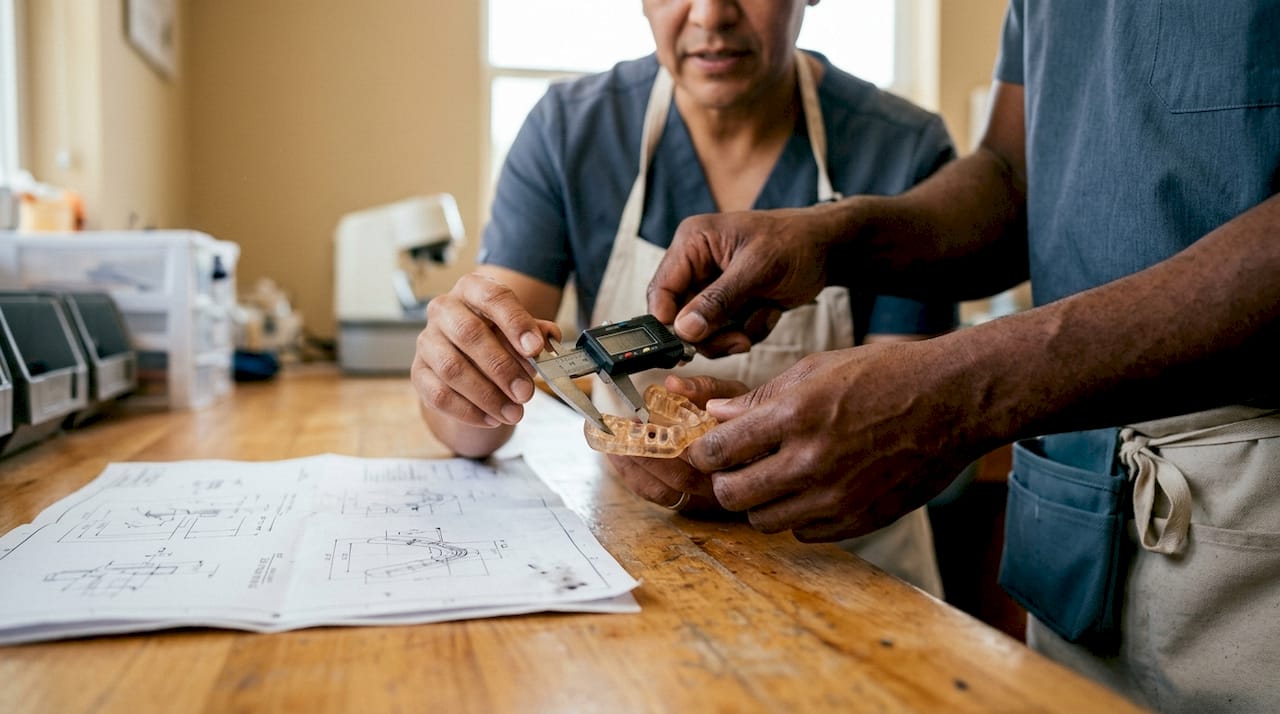
- Fit verification: The guide is tested on a physical or printed model before surgery to confirm it seats correctly and the sleeves align with the plan.
Digital workflows integrating CBCT, intraoral scanning, and CAD/CAM enable flapless or minimally invasive surgery, which shortens recovery and improves patient comfort. Flapless surgery is only safe when the digital plan is accurate enough to protect anatomy without direct visual confirmation.
Pro Tip: Request a copy of your digital implant plan before surgery. Reviewing it with your surgeon helps you understand exactly where each implant will go and why.
How is a surgical guide used during the implant procedure?
The intraoperative steps follow a fixed sequence. Deviating from it defeats the purpose of the guide.
- Guide seating: The surgeon places the guide in your mouth and confirms it seats fully against its support surface, whether teeth, mucosa, or bone. Incomplete seating is the most common source of intraoperative error.
- Fixation: For mucosa and bone-supported guides, fixation pins anchor the guide to prevent movement during drilling. Tooth-supported guides rely on the fit of the template itself.
- Osteotomy preparation: The surgeon drills through the guide’s metal sleeves in a specific sequence, starting with a pilot drill and progressing to the final diameter. Each sleeve controls angle and depth simultaneously.
- Implant insertion: The implant is placed through the guide sleeve to the planned depth and angulation. In fully guided protocols, the implant driver also passes through the sleeve.
- Verification: The surgeon checks implant stability and position before removing the guide. Adjustments at this stage are rare but possible if resistance or anatomy demands it.
The choice between full-guided and half-guided protocols matters here. Full-guided templates are favored for maxillary, anterior, and immediate implant cases, where esthetic precision is non-negotiable. Half-guided templates, where the guide controls drilling but the surgeon places the implant freehand, are preferred in mandibular posterior regions for cost-effectiveness and flexibility. A survey found 88.1% of clinicians prefer half-guided protocols for posterior mandibular cases. That preference reflects practical anatomy, not lower standards.
For patients considering immediate placement, Implantveneerguide’s guide on immediate implant placement explains how digital planning and surgical guides work together in those time-sensitive cases.
What challenges and limitations come with surgical guide use?
Surgical guides reduce error. They do not eliminate it. Understanding where guides can fail helps you ask better questions before surgery.
- Mucosal shift: Mucosal resilience causes guide movement in edentulous jaws, introducing positional errors that bone-supported guides avoid entirely.
- Mouth opening restrictions: Fully guided surgery in molar regions requires at least 50 mm of mouth opening, and premolar regions require at least 32 mm. Patients with limited opening due to temporomandibular joint issues or muscle tightness may not qualify for fully guided protocols in posterior regions.
- Incomplete seating: A guide that does not seat fully due to tissue swelling, anatomical variation, or fabrication error will place every implant off-target.
- Surgeon dependency: Anatomical variations and tissue conditions require clinician judgment even when a guide is in place. The guide constrains the drill, but the surgeon still manages bleeding, tissue response, and unexpected anatomy.
- Guide rigidity limits: Stackable guide systems address rigidity failures in conventional guides, but they require more complex fabrication and higher upfront cost.
A surgical guide is only as good as the digital plan behind it and the hands that use it. Errors in the CBCT scan, the software plan, or the fabrication process all carry forward into the surgery. Verification at every stage of the workflow is what separates predictable outcomes from correctable mistakes.
Patients with limited mouth opening should discuss this with their surgeon before committing to a fully guided protocol. A half-guided or freehand approach with careful planning may produce better results than forcing a guide into an anatomically constrained space.
Key Takeaways
Surgical guides improve implant placement accuracy by translating a precise digital plan into surgery, but guide type, patient anatomy, and surgeon skill all determine the final outcome.
| Point | Details |
|---|---|
| Guide type determines accuracy | Tooth-supported guides are most accurate; mucosa-supported guides carry the highest positional risk. |
| Digital planning drives results | CBCT, intraoral scanning, and CAD/CAM software must all be accurate before fabrication begins. |
| Mouth opening affects eligibility | Molar-region guided surgery requires at least 50 mm of opening; limited opening may disqualify fully guided protocols. |
| Full vs. half-guided protocols differ | Full-guided suits anterior and immediate cases; half-guided suits posterior mandibular cases for flexibility. |
| Guides complement, not replace, skill | Anatomical variations and tissue conditions still require experienced clinical judgment during surgery. |
What I’ve learned about surgical guides after years of covering implant dentistry
The most common misconception I encounter is that a surgical guide makes implant surgery foolproof. Patients hear “computer-guided” and assume the technology does the work. It does not. Static computer-guided surgery is a powerful adjunct that improves precision and predictability, but it does not replace the surgeon’s ability to read tissue, manage bleeding, or respond to unexpected anatomy.
What I find genuinely exciting is the progress in stackable guide systems. Stackable surgical guides represent a significant advancement, enabling rigid fixation for full-arch cases that conventional guides cannot handle reliably. For patients replacing all their teeth, this technology changes what is achievable in a single surgical appointment.
My honest advice: push your surgeon on the planning process, not just the guide itself. Ask to see the digital plan. Ask which guide type they selected and why. Ask whether the guide was verified on a model before your surgery date. Those questions reveal whether your case received the depth of preparation it deserves. A surgeon who welcomes those questions is one worth trusting.
— Georgina
What Implantveneerguide offers patients researching guided implant surgery
Implantveneerguide is built specifically for patients who want evidence-based answers before they sit in a dental chair.
The platform’s guided implant surgery guide explains how surgical templates align with prosthetic goals and what to expect at each stage of the process. If you are not yet sure whether implants are right for you, the Dental Implant Candidacy Checker walks you through the key clinical factors in minutes. Every resource on Implantveneerguide is built from peer-reviewed research and reviewed by dental professionals, so you get the information your surgeon assumes you already have.
FAQ
What is a surgical guide for dental implants?
A surgical guide is a custom-fabricated template that constrains drill angle, position, and depth during implant surgery based on a pre-planned digital design. It transfers the accuracy of computer planning directly into the surgical field.
How much more accurate is guided implant surgery?
Guided placement reduces angular deviation to 1.5–3 degrees compared to 4–6 degrees freehand, and coronal positional error to 0.5–1 mm compared to 1–2 mm without a guide.
Which surgical guide type is most accurate?
Tooth-supported guides are the most accurate, with a mean 3D deviation of 0.2953 mm. Mucosa-supported guides are the least accurate due to soft tissue movement during drilling.
Can everyone use a fully guided implant protocol?
No. Patients with limited mouth opening may not qualify for fully guided surgery in molar regions, which requires at least 50 mm of opening. A personalized preoperative evaluation determines eligibility.
Does a surgical guide replace the need for a skilled surgeon?
A surgical guide does not replace clinical skill. Anatomical variations, tissue conditions, and unexpected findings during surgery still require experienced judgment to manage safely.