Who Is Not a Candidate for Dental Implants?

Who is not a candidate for dental implants is defined by the presence of specific medical, anatomical, and lifestyle factors that significantly raise the risk of implant failure or serious complications. Uncontrolled diabetes, active gum disease, inadequate jawbone volume, certain medications, and heavy smoking are the primary disqualifiers recognized across clinical practice. The good news is that implant candidacy is not always a permanent verdict. Many patients who are initially excluded can qualify after targeted treatment, lifestyle changes, or staged preparatory procedures.
Who is not a candidate for dental implants: medical conditions that disqualify
Systemic health conditions are the most common reason patients fail dental implant eligibility screening. Dental implant success exceeds 99% under ideal anatomical and systemic conditions, but that number drops significantly when chronic disease is poorly managed. Understanding which conditions create absolute barriers versus manageable risks is the first step toward an honest candidacy assessment.
Uncontrolled diabetes
Uncontrolled diabetes is one of the clearest disqualifiers in implant surgery. HbA1c above 7% increases implant failure risk by approximately 40% due to impaired bone healing and higher infection susceptibility. Well-controlled diabetics with HbA1c below 7% show implant survival rates comparable to non-diabetics. The condition itself is not the barrier. The management of it is.
Bisphosphonate and cancer therapies
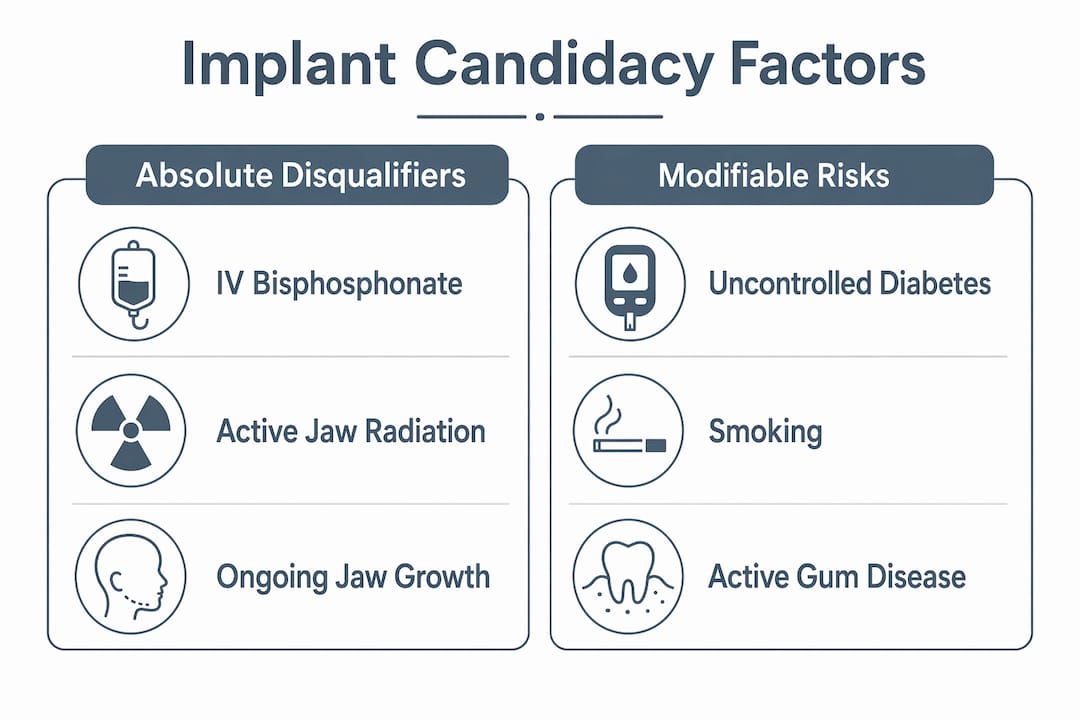
Patients on high-dose IV bisphosphonate or anti-RANKL therapy face elevated risk of Medication-Related Osteonecrosis of the Jaw, commonly called MRONJ. This condition causes jawbone tissue to die, and implant surgery can trigger or worsen it. This contraindication applies specifically to certain osteoporosis and cancer medication regimens, not to low-dose oral bisphosphonates used for general bone health. Patients on active cancer treatment, including radiation to the head and neck, also face significant healing impairment that typically rules out implants during treatment.
Autoimmune disorders and immunosuppression
Autoimmune disorders and immunosuppressive medications reduce the body’s ability to fight infection and integrate the implant with the bone. Conditions like lupus, rheumatoid arthritis, and Sjögren’s syndrome require careful evaluation. The implant surgeon must weigh disease activity, current medications, and overall healing capacity before proceeding.
Age and jawbone maturity
Jawbone maturity is a firm requirement. Implants are not recommended in patients with ongoing jaw growth, such as adolescents, because the implant will not move with the developing bone. Physiologic age and medical status override chronological age in candidacy decisions. A healthy 75-year-old is often a better candidate than an unhealthy 45-year-old.
Pro Tip: Ask your dentist for a full medical history review before any implant consultation. Bring a current medication list, including supplements, since several drug classes interact with bone healing in ways that are not obvious.
How bone health and gum disease affect your eligibility
Bone volume and gum health are the two most controllable anatomical factors in implant candidacy. Both can disqualify a patient, and both can often be treated before implant placement.
Jawbone volume requirements
The jawbone must meet minimum dimensional criteria to securely anchor an implant. Clinicians generally require approximately 10mm of bone height and 5mm of bone width at the implant site. Bone loss from tooth extraction, gum disease, or injury can reduce these dimensions below the threshold. The critical insight here is that bone loss is rarely an absolute barrier. About 85% of patients with bone deficiencies can become candidates after grafting procedures. Surgical advances like bone grafting and sinus lifts have made implants accessible to patients who would have been turned away a decade ago.
Active gum disease
Active gum disease at the implant site greatly increases the risk of peri-implantitis, a condition where bacteria attack the tissue and bone around the implant, leading to failure. Gum health must be stabilized through deep cleaning and periodontal therapy before any implant is placed. Patients who have a history of gum disease but have it under control are not automatically disqualified. They do, however, require more frequent monitoring after placement.
The table below separates treatable conditions from those that currently block candidacy outright.
| Condition | Status | Path forward |
|---|---|---|
| Mild to moderate bone loss | Treatable | Bone grafting or sinus lift |
| Active periodontal disease | Treatable | Periodontal therapy before placement |
| High-dose IV bisphosphonate use | Absolute contraindication | Consult oncologist; consider alternatives |
| Active cancer radiation to jaw | Absolute contraindication | Delay until treatment is complete |
| Controlled diabetes (HbA1c below 7%) | Manageable risk | Proceed with monitoring |
Pro Tip: If your dentist says you have insufficient bone, request a cone beam CT scan (CBCT) before accepting a final answer. CBCT imaging gives a three-dimensional view of bone volume that a standard X-ray cannot provide.
Lifestyle factors that may disqualify you from getting implants
Clinical conditions are not the only disqualifiers. Habits and behaviors carry real weight in the candidacy decision, and dental professionals treat them as seriously as medical diagnoses.
-
Heavy smoking. Smoking increases implant failure rates 2 to 3 times compared to non-smokers by restricting blood flow and slowing healing. Many clinicians require smoking cessation before implant surgery as standard protocol. Patients who smoke but are willing to quit have a clear path to candidacy improvement.
-
Alcohol use and poor nutrition. Chronic heavy alcohol use impairs immune function and bone metabolism. Poor nutrition, particularly deficiencies in calcium and vitamin D, undermines the osseointegration process where the implant fuses with the jawbone. These are modifiable factors, but they require honest self-assessment and commitment to change.
-
Unrealistic expectations. Unrealistic patient expectations are a recognized non-clinical disqualifier. Patients who believe implants are maintenance-free or guaranteed for life show higher dissatisfaction rates and are more likely to neglect the oral hygiene that keeps implants healthy. Patient education directly improves outcomes by aligning expectations with procedural realities.
-
Low commitment to oral hygiene. Implants require the same daily care as natural teeth, plus regular professional cleanings. Patients who are unwilling or unable to maintain this routine face elevated long-term failure risk. Clinicians assess motivation during the consultation process, and a pattern of poor dental attendance is a red flag.
When can you become a candidate? Managing risk and improving eligibility
Most patients initially deemed non-candidates belong to a conditional category. Many disqualifications can be managed or reversed with treatment and lifestyle changes. The distinction between absolute contraindications and modifiable risk factors is the most important concept in candidacy evaluation.
Pathways to improved candidacy include:
- Medical clearance and multidisciplinary evaluation. Complex cases require input from your primary care physician, endocrinologist, or oncologist alongside your implant surgeon. This coordination protects you and gives the surgical team the full picture.
- Periodontal therapy. Treating active gum disease before implant placement is a standard preparatory step. Most patients complete this phase within a few months.
- Bone grafting and sinus lifts. These procedures rebuild bone volume at the implant site. The treatment timeline for grafting typically adds 3–6 months before implant placement, but it converts many ineligible patients into candidates.
- Diabetes control. Bringing HbA1c below 7% through medication adjustment, diet, and exercise is a concrete, measurable target that directly changes candidacy status.
- Smoking cessation. Most clinicians recommend stopping smoking at least 8 weeks before surgery and continuing abstinence through the healing phase.
If candidacy remains unattainable, alternatives like implant-supported bridges, removable partial dentures, or full dentures provide functional tooth replacement without the same biological demands. These are not inferior options. They are appropriate solutions for patients whose health profile makes implant surgery genuinely risky.
Implant candidacy is no longer a simple yes/no call but a dynamic decision requiring multidisciplinary systemic health evaluations. The dental implant consultation checklist from Implantveneerguide walks you through exactly what to prepare before that first specialist appointment.
Key Takeaways
Patients who are not candidates for dental implants today can often qualify after addressing modifiable risk factors like uncontrolled diabetes, active gum disease, bone deficiency, and smoking through targeted medical and dental treatment.
| Point | Details |
|---|---|
| Absolute vs. modifiable disqualifiers | IV bisphosphonate use and active jaw radiation are absolute; most other factors can be treated or managed. |
| Diabetes control matters | Bringing HbA1c below 7% changes candidacy status and brings failure risk in line with non-diabetics. |
| Bone loss is rarely final | About 85% of patients with bone deficiencies can become candidates after grafting procedures. |
| Smoking triples failure risk | Heavy smokers face 2 to 3 times higher failure rates; cessation before surgery is standard clinical protocol. |
| Expectations are a clinical factor | Unrealistic expectations and poor hygiene commitment are recognized non-clinical reasons clinicians deny candidacy. |
What I’ve learned about candidacy decisions after years in dental education
The most common mistake patients make is treating a “not yet” as a “never.” I have seen patients walk out of consultations convinced they were permanently disqualified, when in reality they needed three months of periodontal therapy and a blood sugar conversation with their doctor.
The second mistake is the opposite: assuming that because a dentist said yes, everything will be fine regardless of what you do afterward. Implants are not self-maintaining. The patients who get the best long-term outcomes are the ones who show up to every follow-up, brush twice a day, and quit smoking before the surgery, not after.
What the research makes clear, and what I think gets lost in clinical conversations, is that candidacy is a spectrum. The framework of absolute contraindications versus modifiable risk factors is not just academic. It is the most useful tool a patient has for understanding their own situation. If your disqualifier is on the modifiable list, you have a real path forward. If it is on the absolute list, you need honest guidance on alternatives, not false hope.
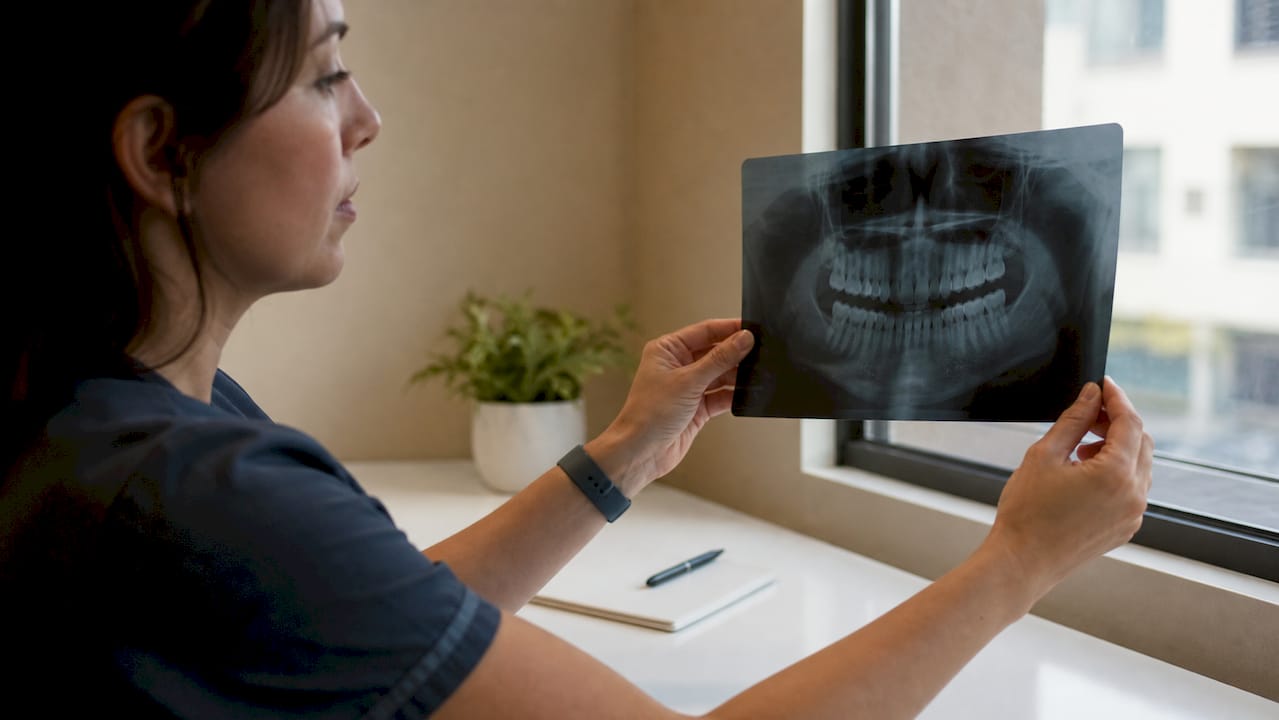
The patients who do best are the ones who ask hard questions, follow through on preparatory care, and choose a surgeon who takes the time to evaluate the full picture rather than just the X-ray.
— Georgina
Your next step toward understanding implant eligibility
Knowing the disqualifying factors is the starting point. The next step is understanding where you personally stand.
Implantveneerguide’s candidacy screening tool walks you through a structured, evidence-based assessment of your medical history, lifestyle factors, and oral health status. It takes less than five minutes and gives you a clear picture of your eligibility before you spend time or money on a consultation. For patients who want a broader view of what the implant process involves, the procedures overview covers every stage from preparatory grafting to final placement. Both resources are built on peer-reviewed clinical standards and reviewed by dental professionals, so you can trust what you are reading.
FAQ
Who absolutely cannot get dental implants?
Patients on high-dose IV bisphosphonate therapy, those undergoing active radiation to the jaw, and adolescents with incomplete jaw growth are the clearest absolute contraindications. Most other disqualifying conditions are modifiable with appropriate treatment.
Can smokers ever qualify for dental implants?
Yes. Smoking is a modifiable risk factor, not an absolute contraindication. Most clinicians require cessation at least 8 weeks before surgery, and patients who quit show significantly improved healing and success rates.
Does age disqualify you from getting implants?
Chronological age alone does not disqualify patients. Overall systemic health, healing capacity, and bone quality determine candidacy. A healthy patient in their 80s can be a better candidate than an unhealthy patient in their 40s.
Can gum disease be treated before getting implants?
Active gum disease must be treated and stabilized before implant placement. Periodontal therapy, including deep cleaning, resolves most cases within a few months and restores candidacy for the majority of patients.
What are the alternatives if I cannot get implants?
Implant-supported bridges, removable partial dentures, and full dentures are the primary alternatives. These options provide functional tooth replacement and are appropriate for patients whose health profile makes implant surgery genuinely high-risk.