DHMO vs. PPO Dental Plans: Which One Saves You Money?

DHMO plans usually deliver lower, more predictable dental costs through an in-network primary dentist model, while PPO plans cost more but give you broader provider choice and partial reimbursement for out-of-network care. If your priority is cheap, predictable checkups, a DHMO wins. If you’re planning an implant, veneers, or other major restorative work and want to keep your own dentist, a PPO is usually worth the higher premium.
TL;DR:
- DHMO plans have no annual maximums and fixed copays, making them more predictable but less suitable for major restorative procedures.
- PPO plans feature deductibles, coinsurance, and annual caps, which can lead to high out-of-pocket costs if extensive treatment is needed.
- Out-of-network coverage is unavailable for DHMOs but available partially for PPOs, impacting flexibility if you prefer specific dentists.
- Verify that your current dentist participates in your chosen plan and clarify claims and referral procedures before enrollment.
- Use cost estimation tools and plan fee schedules to accurately compare potential out-of-pocket expenses for major dental work.
Table of Contents
- HMO vs. PPO Dental Coverage at a Glance
- What Is a Dental HMO and How Does It Work?
- What Is a Dental PPO and How Does It Work?
- How Much Will You Actually Pay Out of Pocket?
- Can You Keep Your Dentist or See a Specialist Fast?
- Where Do Waiting Periods and Coverage Limits Hide?
- Choosing Between DHMO and PPO: Your Decision Checklist
- How Insurance Choice Shapes Implant and Veneer Planning
- Planning Ahead: Tools to Model Your Treatment Costs
- Sources
HMO vs. PPO Dental Coverage at a Glance
The fastest way to see the trade-off is side by side. DHMO plans trade flexibility for price. PPO plans trade price for flexibility, and that single swap explains almost every other difference on this list.
| Feature | DHMO | PPO |
|---|---|---|
| Monthly premium | Typically lower | Typically higher |
| Deductible | Often none | Common, usually applies before coverage kicks in |
| Copays/coinsurance | Fixed, predictable copays | Coinsurance percentage after deductible |
| Annual maximum | Often no cap | Common, insurer contribution caps out |
| Out-of-network coverage | None | Partial reimbursement |
| Referral for specialists | Usually required | Usually not required |
| Network size | Smaller, regional | Broader, national |
| Best for | Routine, budget-conscious care | Specialist access, existing dentist, major work |
The UnitedHealthcare comparison of dental PPO and HMO plans confirms this pattern: DHMOs skip the annual maximum in many cases, while PPOs almost always have one. That single line item is where PPO members can get burned on big procedures.
What Is a Dental HMO and How Does It Work?
A dental HMO, or DHMO, requires you to pick a primary care dentist from a fixed network and get a referral before seeing a specialist, according to Cigna’s breakdown of dental HMO and PPO plans. In exchange, you get lower premiums, set copays, and often no deductible or annual maximum at all.
DHMOs are built around preventive care. Cleanings, exams, and X-rays tend to be fully or mostly covered, which is exactly why Delta Dental positions DHMO plans as budget-first, prevention-focused coverage. Major restorative work, like crowns or implants, often comes with tighter limits.
Here’s the catch most people miss: dentists in DHMO networks get paid through capitation, a fixed monthly fee per assigned patient regardless of how many visits occur. That payment model shifts financial risk onto the provider, which is part of why some dentists decline to join DHMO networks at all.
- Lower monthly premiums than PPO plans
- Fixed copays instead of percentage coinsurance
- Primary care dentist and referral requirement
- Dentist participation can shrink year to year, so verify before you enroll
What Is a Dental PPO and How Does It Work?
A dental PPO, or DPPO, works through a network of dentists who agree to discounted fees, but you’re never locked into one office and you don’t need a referral to see a specialist. Cigna notes that PPO plans typically skip both the primary dentist requirement and referrals, which is the main reason people choose them.
The flexibility comes at a cost. PPOs commonly carry deductibles, coinsurance percentages, and an annual maximum on what the insurer will pay. Go outside the network and you still get partial reimbursement, just at a lower rate than in-network care.
This structure explains why PPO plans account for the majority of commercial dental enrollment in the U.S., especially among people who already have a dentist they trust or who anticipate needing an oral surgeon or periodontist.
- No primary dentist selection or referral needed
- Coinsurance and deductibles apply, unlike most DHMOs
- Partial reimbursement for out-of-network visits
- Better fit if you’re planning implants, orthodontics, or specialist referrals
How Much Will You Actually Pay Out of Pocket?
Premiums are the easy number to compare. The harder math is what happens after you add deductibles, coinsurance, and the ceiling on what your insurer will pay in a given year.
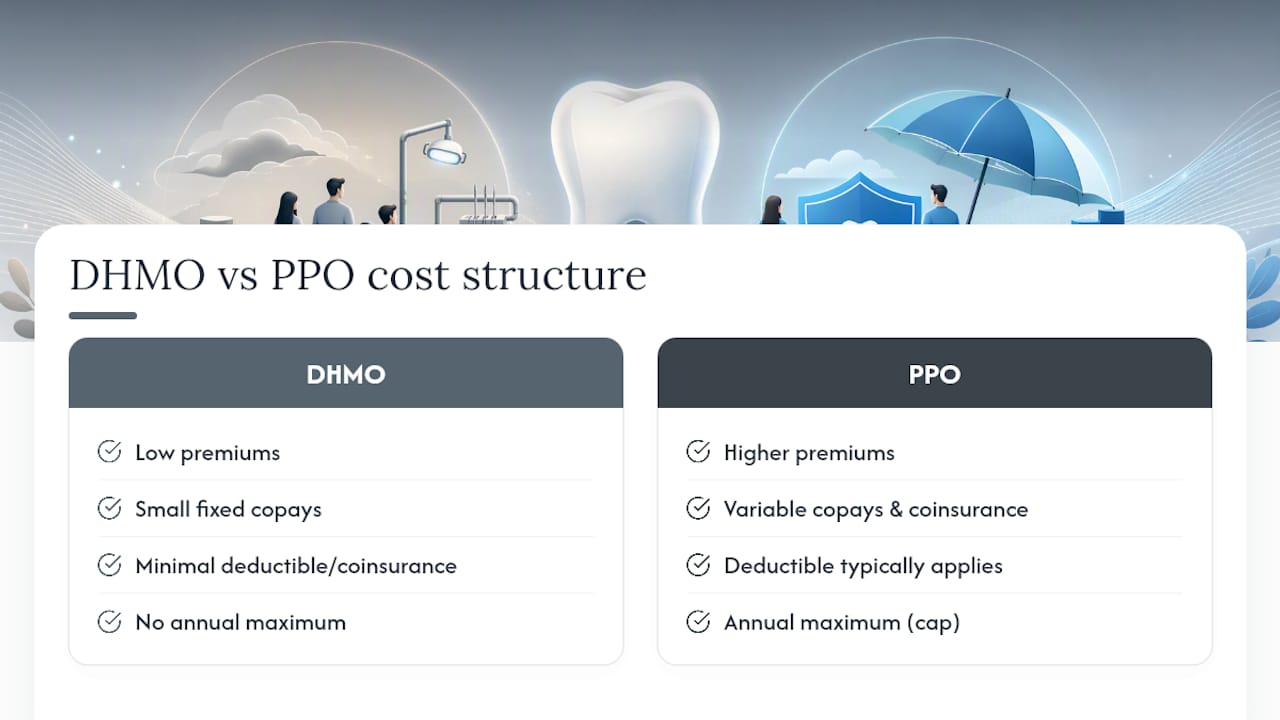
Picture two patients. One stays on a DHMO all year, paying a low premium and small fixed copays for two cleanings and a filling, total out-of-pocket maybe a couple hundred dollars. The other has a PPO and needs a dental implant. Premiums run higher all year, then the procedure itself blows past the plan’s annual maximum. Under most PPO plans, once you hit that insurer’s cap, you’re responsible for 100% of remaining costs, and implants routinely exceed typical annual maximums by a wide margin.
DHMOs tend to sidestep this problem simply by not having an annual maximum, but they also cover major restorative work less generously in the first place. Before committing to either plan for a big procedure, run the numbers using a dental implant and veneer cost estimator alongside your plan’s fee schedule.
Pro Tip: Ask your insurer for the plan’s full fee schedule, not just a summary brochure, and bring it to your dentist’s office. A five-minute conversation with your dentist’s billing coordinator will tell you more about real out-of-pocket cost than any marketing page.
Can You Keep Your Dentist or See a Specialist Fast?
Network rules decide how much control you keep over your own care. DHMO members are locked into their assigned network, full stop, no out-of-network coverage exists. PPO members get partial reimbursement anywhere, which matters if you travel, relocate, or just prefer a specific specialist.
Referrals add another layer. DHMO plans generally route every specialist visit through your primary dentist first, which can add days or weeks before you get an appointment. PPO plans skip that step entirely, letting you book a periodontist or oral surgeon directly.
Before you enroll, work through this quickly:
- Call your current dentist’s office and confirm they’re active in the specific plan network, not just “in-network with the carrier” generally.
- Ask for their network provider ID and cross-check it against the insurer’s online directory.
- Ask how claims get filed. Some DHMO offices bill differently than PPO offices, and prior authorization rules vary.
- If you already know you need a specialist, confirm whether that provider accepts your plan before you sign anything.
A guide on choosing a cosmetic dentist walks through similar verification steps if you’re vetting a new provider for cosmetic or restorative work.
Where Do Waiting Periods and Coverage Limits Hide?
Every plan splits services into buckets, usually preventive, basic, and major, with orthodontics often handled separately. Preventive care (cleanings, exams) is typically covered close to 100%. Basic services like fillings get partial coverage. Major services, crowns, bridges, implants, tend to carry the steepest cost-share and the longest waiting periods.
PPO plans in particular often impose a six-to-twelve-month waiting period before major services are covered, though prior continuous coverage with another plan can sometimes waive that wait. Orthodontic benefits frequently cap out at a lifetime maximum and may exclude adults entirely.
- Check the Summary of Benefits for waiting period language on major services
- Read the Evidence of Coverage document for orthodontic age limits and lifetime caps
- Look specifically for how implants and veneers are classified, since some plans treat implants as cosmetic and exclude them outright
Choosing Between DHMO and PPO: Your Decision Checklist
Start with your own treatment plan, not the premium. If you expect nothing beyond routine cleanings for the next year, a DHMO’s lower cost is hard to beat. If you have a dentist you don’t want to leave, or you’re facing implants, veneers, or orthodontics, the PPO’s flexibility usually pays for itself.
- List every dentist and specialist you currently see or plan to see.
- Check each one against the specific plan’s network directory, not a general carrier search.
- Estimate your likely treatment for the next 12 to 24 months, including anything major.
- Compare total expected cost (premium plus copays or coinsurance) against your budget tolerance, not just the monthly bill.
- Ask the insurer directly about waiting periods, annual maximums, and the claims process before you sign up.
Watch for red flags: a “preferred” dentist who isn’t actually listed in that plan’s current directory, a fee schedule that’s vague about specific procedure codes, or an insurer that won’t clearly state the waiting period in writing.
Pro Tip: If you’re debating between plans and expect major work within the next two years, call the dentist’s office directly and ask them which plan type their patients complain about least. Front-desk staff see the reimbursement headaches in real time. The ADA’s guide to choosing the right dental plan backs this up, recommending you confirm participation and claims procedures with both insurer and provider before enrolling.
How Insurance Choice Shapes Implant and Veneer Planning
Insurance decisions and treatment planning aren’t separate conversations, they’re the same one. A patient weighing a dental implant needs to know their plan’s annual maximum months before surgery, not after the estimate arrives. PPO annual maximums frequently fall short of a single implant’s total cost, while DHMO plans may exclude implants from coverage altogether.
The right move is pairing your insurer’s Evidence of Coverage with a real quote from your dentist, then checking that against a cost estimator built for implants and veneers. Implantveneerguide builds its guides from peer-reviewed sources and dental professional input specifically so patients can plan restorative work with real numbers instead of guesswork.
— Georgina
Planning Ahead: Tools to Model Your Treatment Costs
Neither a DHMO nor a PPO tells you exactly what an implant or a full set of veneers will cost you personally, that depends on your case, your dentist’s fees, and your plan’s specific limits. This is where a planning tool earns its place next to your insurance documents, not instead of them.
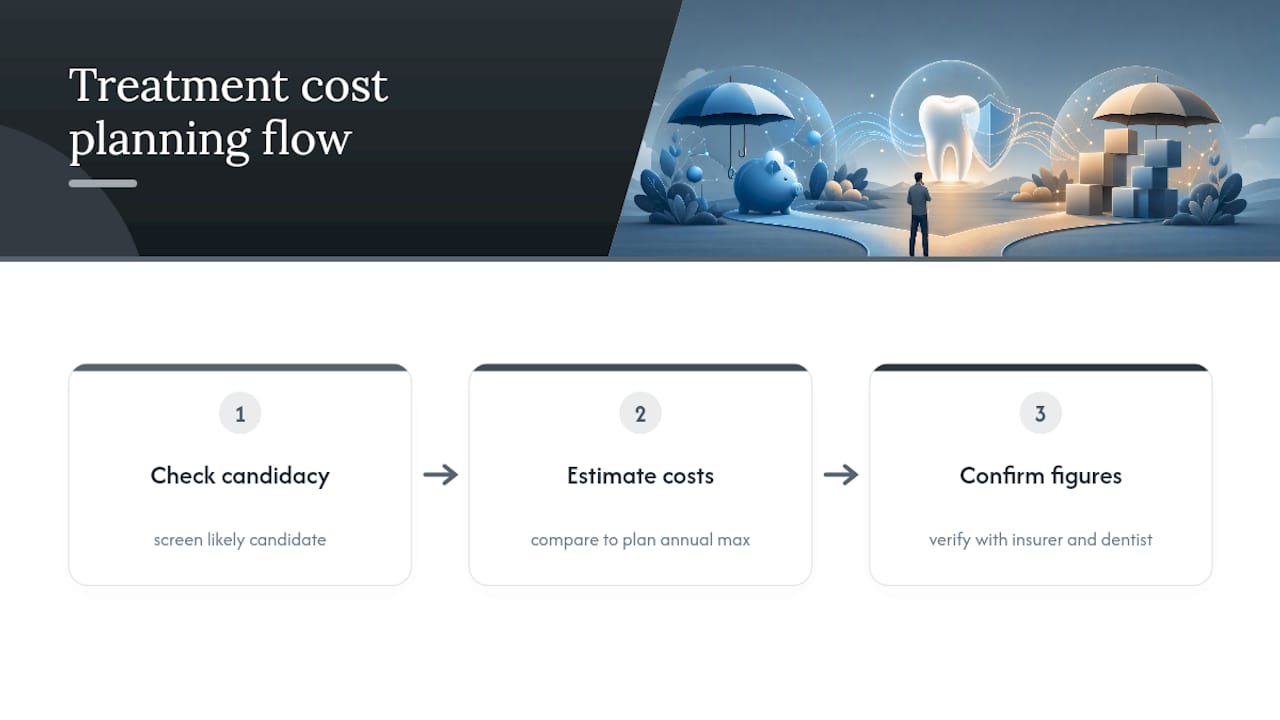
Implantveneerguide built two tools specifically for this gap. The Dental Implant & Veneer Cost Estimator gives you a realistic U.S. price range based on your case details, so you can compare it directly against your plan’s annual maximum before you commit to treatment. The Dental Implant Candidacy Checker screens whether you’re likely a good candidate at all, which matters just as much as cost when you’re deciding whether to pursue an implant now or wait.
Neither tool replaces your insurer or your dentist. Run your numbers through the estimator, then confirm the final figures with both before you schedule anything.
This article is general information, not a substitute for advice from a qualified doctor. Consult a qualified healthcare professional about your own circumstances before acting on anything here.