What a Dental Bone Graft Actually Costs
A dental bone graft typically runs $300 to $5,148, with most patients paying somewhere between $680 and $1,790 for a single site, according to national averages from Pearl’s dental cost database. The number depends almost entirely on two things: what material your dentist uses and how much bone needs rebuilding.
The cheapest, most common scenario is socket preservation done right after a tooth extraction. That procedure typically costs a few hundred dollars and simply holds the shape of your jaw so a future implant has somewhere to go. The expensive end belongs to autografts and block grafts, where a surgeon harvests your own bone from another site (often the chin or hip) and rebuilds a severely resorbed ridge. Those cases can run past $5,000 for the graft alone, according to CareCredit’s cost breakdown.
Here’s the part people miss when they budget: the graft is rarely the whole bill.
- The implant itself, typically placed months later, is a separate charge
- Sedation or general anesthesia adds cost if you’re not doing local only
- A CBCT scan (3D imaging) is usually billed on top of the surgical fee
- Membranes or specialized grafting kits can add $100 to $400 per site
Quick math: if your dentist quotes $800 for a “standard bone graft” and you’re also getting an implant, expect the combined bone graft cost dental treatment plan to land closer to $3,000 to $6,000 once everything is itemized.
Key Takeaways
Bone graft cost depends primarily on material choice and procedure extent, ranging from $300 for simple socket preservation to over $5,000 for autograft reconstructions.
| Point | Details |
|---|---|
| National cost range | Expect $300 to $5,148 depending on material and procedure, with most single-site grafts falling between $680 and $1,790. |
| Cheapest option | Socket preservation at extraction costs $300 to $500 and often prevents the need for costlier reconstruction later. |
| Most expensive option | Autografts and block grafts run $2,161 to $5,148 due to a second surgical site and longer healing time. |
| Insurance caps matter more than percentage | Even at 40 to 50% reimbursement, annual maximums of $1,000 to $2,000 often fall short of a single sinus lift or block graft. |
| Compare with a real tool | Implantveneerguide’s cost estimator and candidacy checker help you benchmark a provider’s quote against national ranges before you commit. |
Table of Contents
- How Much Does a Dental Bone Graft Cost by Material and Procedure?
- What Factors Affect the Cost of a Dental Bone Graft?
- Does Dental Insurance Cover Bone Grafts?
- What Happens During a Bone Graft Procedure and Recovery?
- How Do You Estimate Your Out-of-Pocket Bone Graft Cost?
- Where Does This Cost Information Come From?
- What People Get Wrong About Bone Graft Pricing
- Compare Your Quote With Our Cost Estimator
- Frequently Asked Questions
- Sources
How Much Does a Dental Bone Graft Cost by Material and Procedure?
Not all bone grafts cost the same, and the material choice alone can swing your price by thousands of dollars. Providers generally offer four graft materials, and each carries a distinct price band tied to how it’s sourced and processed.
Autograft (your own bone, harvested from another site in your body) sits at the top of the price range, often costing several thousand dollars, according to CareCredit. The premium exists for a clear clinical reason: autografts require a second surgical site, longer operative time, and closer follow-up. Surgeons favor them for complex reconstructions because they carry the patient’s own living bone cells, which tends to integrate more reliably in difficult cases, a point Johns Hopkins Medicine covers in its overview of graft biology.
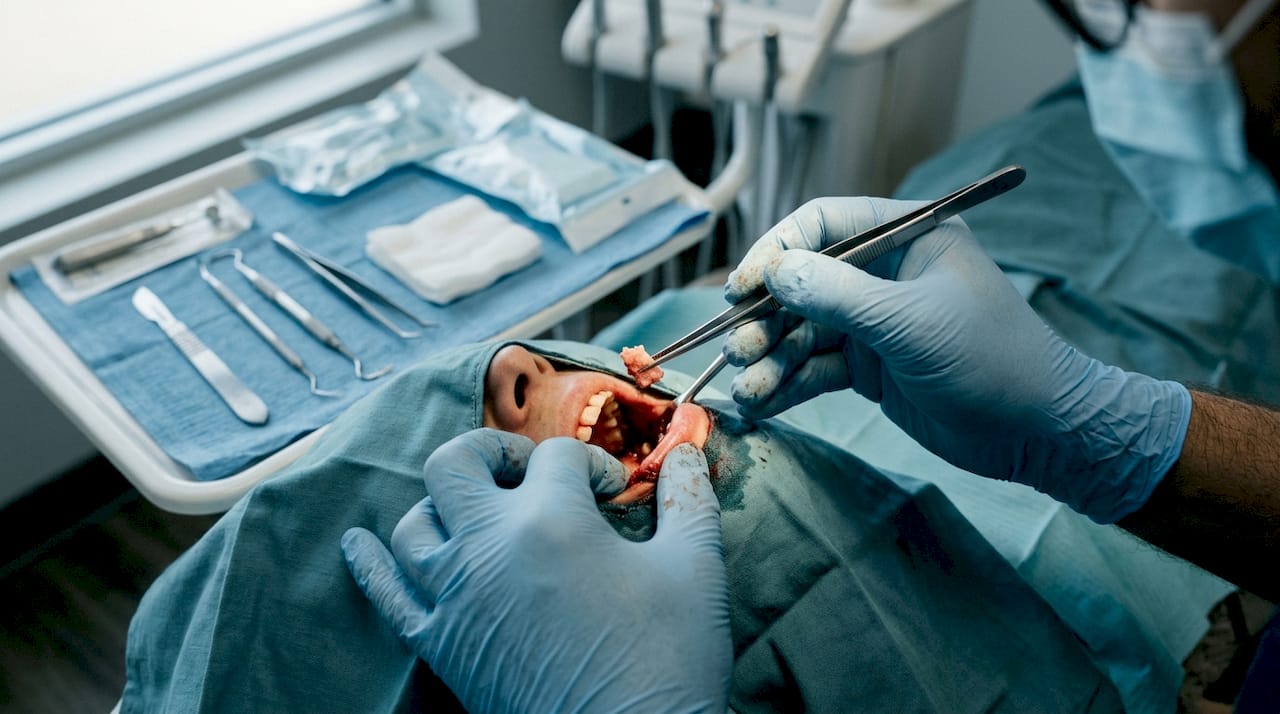
Allograft (processed donor bone from a tissue bank) runs in a moderate cost range. It skips the second surgical site entirely, which is why it costs less and heals with less overall discomfort than an autograft.
Xenograft (bone derived from an animal source, usually bovine) is among the least expensive biological options. It acts mainly as scaffolding, giving your own bone cells a structure to grow into over time.
Alloplast (a synthetic, lab-made material) generally costs a few hundred to somewhat over a thousand dollars, similar to xenograft pricing, and is often chosen when a patient prefers to avoid donor tissue altogether.
Procedure type matters just as much as material, since the same graft material costs more or less depending on how much reconstruction is involved.
| Procedure | Typical Cost Range | What It Involves |
|---|---|---|
| Socket preservation | typically costs a few hundred dollars | Graft placed into an extraction socket immediately after a tooth is pulled |
| Standard particulate graft | usually costs from several hundred to under two thousand dollars | Granular graft material packed into a defect before implant placement |
| Sinus lift | generally costs around one to several thousand dollars | Graft placed beneath the sinus membrane to build height in the upper jaw |
| Ridge augmentation / block graft | tends to be at higher cost tiers of several thousand dollars and up | Solid bone block secured to rebuild a severely narrowed or collapsed ridge |
These published ranges typically cover the surgeon’s fee and the graft material itself. They usually do not include sedation beyond local anesthesia, a CBCT scan, membranes used to hold the graft in place, or the eventual implant. SurgeryCostGuide puts the blended national average around $1,500, with a typical range of $300 to $3,000, which lines up closely with what CareCredit and Pearl report once you average across material and procedure types.
One insight worth sitting with: timing changes which row of that table you land in. Socket preservation done at the moment of extraction is one of the most cost-efficient moves in the entire process, because it prevents the bone loss that later forces a sinus lift or ridge augmentation. Wait two years after losing a tooth, and you’re often looking at the $2,500+ row instead of the $300 row for a problem that could have been prevented for a fraction of the cost.
What Factors Affect the Cost of a Dental Bone Graft?
Two patients can get the “same” bone graft and receive quotes $2,000 apart. Here’s what actually drives that gap.
- Material choice. Autograft costs more than allograft, xenograft, or alloplast because of the second surgical site and added operative time.
- Extent of reconstruction. A single small defect costs far less than multiple sites or a full-arch rebuild.
- Provider specialty. General dentists sometimes charge less for straightforward socket grafts, while periodontists and oral surgeons, who handle sinus lifts and block grafts, typically bill higher fees that reflect specialized training.
- Facility and anesthesia setting. An office-based procedure under local anesthesia costs less than the same graft done in an outpatient surgery center or hospital. Hospital-based procedures can run 30 to 50% more, according to SurgeryCostGuide, largely due to facility fees and anesthesia staffing.
- Auxiliary billed items. Membranes, specialized graft kits, CBCT imaging, the extraction itself if it hasn’t happened yet, and follow-up visits all show up as separate line items.
- Geography and overhead. Urban markets with higher rent and labor costs tend to price procedures higher than rural practices, mirroring the state-level variance Pearl’s database tracks across the country.
Pro Tip: Ask your provider for an itemized quote broken out by graft material, membrane, imaging, and facility fee before you compare two dentists’ prices. A “$1,200 bone graft” quote that includes a CBCT scan is a better deal than a “$900 bone graft” quote that bills imaging separately at $250 extra.
Provider experience also plays into the number in a less obvious way. A specialist who does dozens of sinus lifts a month may quote more per case but report fewer complications and redo procedures, which matters more to your total cost than the sticker price on the initial estimate.
Does Dental Insurance Cover Bone Grafts?
Sometimes, and the answer usually hinges on one word: necessity. Dental plans generally cover bone grafts only when a dentist documents the procedure as medically necessary, such as repairing bone loss from periodontal disease or trauma. Grafts performed purely to prepare a site for an elective implant are frequently classified as implant-preparation and excluded, or covered at a reduced rate.
When a plan does pay, the pattern is fairly consistent across providers: reimbursement typically covers around 40 to 50% of the cost after your deductible, with annual maximums often capped between about one thousand and two thousand dollars, according to figures compiled by Pearl’s cost database. That cap matters more than the percentage in most real cases, since a single sinus lift can exceed the entire annual maximum on its own.
Medical insurance sometimes enters the picture, and it’s worth asking about even if your first instinct is to file everything through dental. If the graft stems from an accident, tumor removal, or a medically necessary reconstruction unrelated to routine tooth loss, medical coverage can apply. Bring operative reports, imaging, and a clear diagnosis code to that conversation. Without documentation showing medical necessity, insurers routinely deny the claim outright.
A few practical steps improve your odds of getting anything covered:
- Ask your dentist which ADA billing code applies (D7953 is common for socket preservation; ridge augmentation procedures may use different codes depending on technique).
- Request pre-authorization before treatment, not after. Retroactive approval is far less reliable.
- Check whether your plan year resets soon; splitting a multi-site treatment plan across two benefit years can double your effective coverage cap.
If insurance falls short, dental bone graft financing through programs like CareCredit or in-office payment plans is the most common workaround patients use. Dental school clinics, which often perform procedures at reduced rates under faculty supervision, are worth checking if you live near a university with a dental program. For a deeper look at how implant-related coverage works more broadly, see this guide to dental insurance coverage for implants.
What Happens During a Bone Graft Procedure and Recovery?
The appointment itself is more routine than most patients expect. Here’s the general sequence:
- Your provider numbs the site with local anesthesia, and adds sedation if you’re anxious or the case is complex.
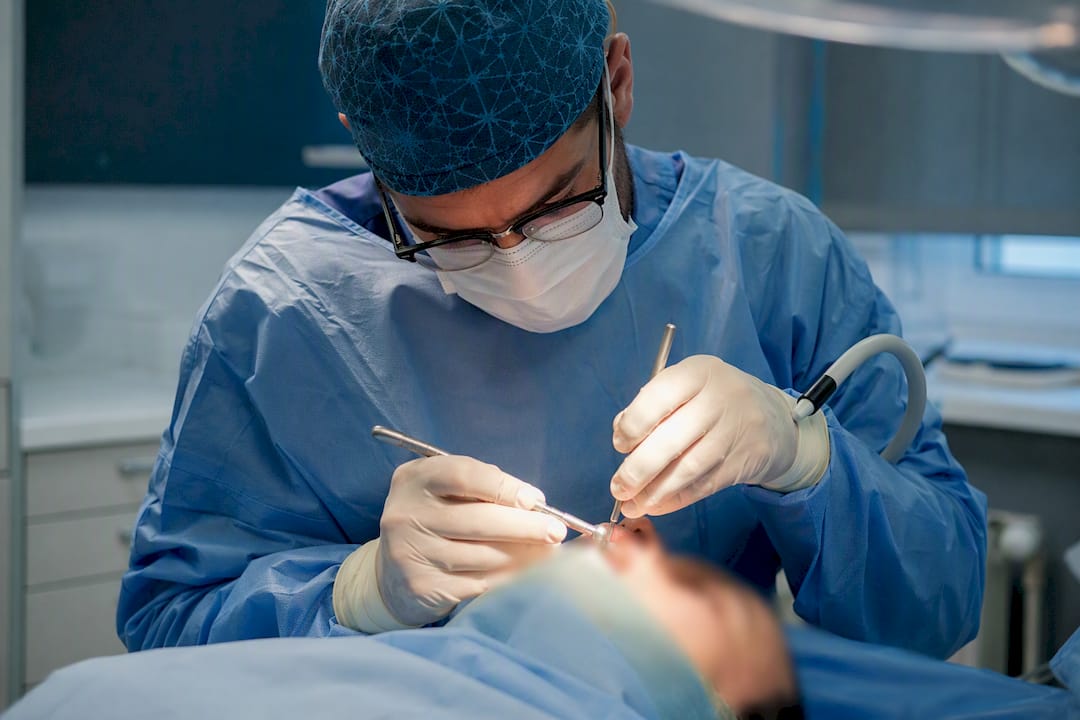
- Damaged tissue is cleaned out and the graft material is placed into the defect.
- A membrane is often positioned over the graft to keep it stable and prevent soft tissue from growing into the space too early.
- Sutures close the site, and you receive post-op instructions covering diet, swelling control, and medication.
Healing timelines vary widely depending on which procedure you had:
- Socket preservation heals fastest, often ready for implant placement in three to four months.
- Standard particulate grafts typically need four to six months before the bone is dense enough to support an implant.
- Sinus lifts usually require six to nine months of healing given the sensitivity of the sinus membrane.
- Block grafts take the longest, often nine to twelve months, since a solid piece of bone needs full integration.
Mild swelling, bruising, and soreness for three to five days are normal. Red flags include fever, pus, a graft that feels loose, or pain that worsens instead of improving after the first week. Your provider’s risk and complication guidance covers these signs in more depth if you want a fuller picture before treatment.
General dentists comfortably handle straightforward socket preservation. Sinus lifts and block grafts, given the anatomical complexity involved, are more often handled by periodontists or oral surgeons. For a broader sense of what to expect week by week, recovery timelines across different implant and grafting procedures are laid out separately.
How Do You Estimate Your Out-of-Pocket Bone Graft Cost?
Start by getting an itemized estimate, not a single lump number. A trustworthy quote breaks down the graft material, membrane, imaging, sedation, and any extraction fee separately, so you can see exactly what you’re paying for.
Once you have that breakdown, normalize it against any other quotes you’re considering. A $700 quote that excludes CBCT imaging isn’t actually cheaper than a $950 quote that includes it. Match material type, facility setting, and included services line by line before deciding which number is genuinely lower.
At your consultation, a short list of questions saves real money down the line:
- Why this graft material specifically, and what would a lower-cost alternative cost and risk?
- What’s included in this quote, and what’s billed separately later?
- What’s the expected timeline to implant placement, and does that affect total cost if healing takes longer than average?
- What’s your policy if the graft fails and needs to be redone?
Pro Tip: If cost is the deciding factor and you haven’t had the tooth extracted yet, ask specifically about socket preservation at the time of extraction. It’s consistently the least expensive path and can eliminate the need for a larger, costlier graft later.
When two quotes differ by more than a few hundred dollars for what sounds like the same procedure, get a second opinion. Comparing providers gets easier with a checklist for evaluating a dental provider before you commit to treatment.
Where Does This Cost Information Come From?
Implantveneerguide built these ranges from published national cost data, cross-checked across multiple sources rather than relying on any single database. CareCredit, Pearl’s HelloPearl cost tool, and Zocdoc-linked aggregators all publish real-world pricing data collected from providers and patients, and where their figures diverge, we reported the range rather than picking the most flattering number. Clinical descriptions of graft materials and healing biology come from Johns Hopkins Medicine, and this guide is reviewed for accuracy against current dental practice standards.
Our cost estimator takes this a step further by adjusting for your ZIP code, the graft type you need, and how many sites require treatment. Enter your quote alongside those variables, and it flags whether you’re paying within a typical range or significantly above it. It’s a starting point for comparison, not a replacement for the number your provider hands you after an exam.
For readers still early in the decision process, the procedures overview and recovery timelines pages fill in the clinical context this cost guide doesn’t cover in depth, and the insurance coverage guide walks through claims strategy in more detail than the section above.
What People Get Wrong About Bone Graft Pricing
Most patients fixate on the graft material’s sticker price and miss the variable that actually determines their final bill: timing. The data bears this out clearly. Socket preservation at extraction costs a few hundred dollars; waiting two years and needing a ridge augmentation instead costs thousands more, for a problem that started as the exact same missing tooth.
The conventional advice, shop around for the cheapest graft quote, isn’t wrong, but it’s incomplete. A $400 quote that excludes imaging and a membrane isn’t a better deal than a $650 quote that includes both. Readers who compare bottom-line numbers instead of itemized quotes routinely get surprised by add-on charges that push a “cheap” graft well past what a more transparent quote would have cost.
If you’re planning treatment now, the single highest-leverage move is asking your dentist directly whether socket preservation makes sense at extraction, before bone loss narrows your options and your budget. That one conversation, timed correctly, does more for your wallet than any amount of quote shopping after the fact.
Compare Your Quote With Our Cost Estimator
Getting a bone graft quote from one provider tells you what that office charges. It doesn’t tell you whether the price is reasonable, or whether the material and procedure they recommended actually fits your case. Implantveneerguide’s Dental Implant & Veneer Cost Estimator gives you a second data point, built from national pricing ranges rather than a single office’s rate card, so you can walk into your consultation knowing what a fair number looks like before anyone quotes you one.
Pair the estimator with the Dental Implant Candidacy Checker if you’re not yet sure whether grafting and implants are the right path for your situation. Both tools are informational, built to help you ask sharper questions at your next appointment, not to replace an actual clinical exam. Enter your ZIP code and procedure details into the cost estimator now, and bring the results with you to your next consultation.
Frequently Asked Questions
Is a bone graft always needed before a dental implant? Not always. Implants can sometimes be placed directly if you have sufficient bone density and volume. A graft becomes necessary when bone has resorbed after tooth loss, periodontal disease, or trauma, which your provider evaluates with imaging before recommending treatment.
How much does a dental bone graft cost with insurance? If your plan classifies the graft as medically necessary, expect roughly 40 to 50% reimbursement after your deductible, capped at an annual maximum often between $1,000 and $2,000. Grafts done purely to prepare for an elective implant are frequently excluded or covered at a lower rate.
What is the cheapest type of dental bone graft? Xenograft and alloplast (synthetic) materials tend to sit at the lower end of the price range, roughly $549 to $1,386 and $576 to $1,375 respectively, since neither requires harvesting bone from a second site on your body.
How long does it take to recover from a bone graft before getting an implant? It depends on the procedure. Socket preservation often heals enough for implant placement in three to four months, while sinus lifts and block grafts can require six to twelve months of healing before the bone is dense enough to support an implant.
Can I negotiate the cost of a dental bone graft? Some providers offer itemized discounts or reduced rates for dental school clinics performing supervised procedures. Getting multiple itemized quotes and asking directly about payment plans or financing through CareCredit are the most reliable ways to lower your out-of-pocket total.
This article is general information, not a substitute for advice from a qualified doctor. Consult a qualified healthcare professional about your own circumstances before acting on anything here.
Sources
- Dental Bone Graft Cost and Procedure Guide — CareCredit
- Dental Bone Graft Cost — National Average per Site | Pearl
- Bone grafting — Johns Hopkins Medicine
- Dental Bone Graft Cost: $1,500 Avg in 2026 ($300–$3,000) — SurgeryCostGuide