U.S.: Plan and Document Your Dental Implant FSA Claim (2026)

Yes — dental implants can be paid with FSA dollars when they are medically necessary, not when purely cosmetic. IRS Publication 502 treats amounts spent to prevent or treat dental disease as eligible medical expenses, and implants that replace a missing tooth or stabilize a denture qualify under that standard. The annual FSA contribution limit frames how much of an implant a single plan year can realistically fund.
TL;DR:
- Insurance typically covers dental implants only when they address disease, trauma, or functional decline and not for cosmetic enhancements or appearance alone.
- Documentation including an itemized treatment plan, receipts matching that plan, and a dentist’s letter of medical necessity is essential before filing a claim.
- Costs associated with each stage of implant treatment, such as the post, abutment, crown, bone grafting, and imaging, can qualify separately for FSA reimbursement.
- Spreading implant procedures across two plan years or using a spouse’s FSA can maximize available funds beyond the annual limit.
- Filing should happen promptly after treatment with complete documentation, and preapproval is recommended to avoid claim denials or delays.
Table of Contents
- Why Dental Implants Qualify (And When They Don’t)
- What Documentation Do You Need Before Filing?
- Which Implant Costs Actually Count Toward Your FSA?
- How Do You Stretch FSA Funds Across a Multi-Stage Implant?
- Where Does Insurance and Your HSA Fit In?
- How Do You Actually File the Claim?
- How Implantveneerguide’s Tools Help You Plan the Claim
- What I’d Prioritize If I Were Planning This
- Plan Your Implant Costs Before You Commit to Treatment
- Sources
Why Dental Implants Qualify (And When They Don’t)
The IRS test isn’t about the procedure name. It’s about the reason for the procedure. Publication 502 draws the line at whether a service prevents or alleviates dental disease versus simply improving how your smile looks. That distinction determines whether an implant clears the bar, and it’s the same logic your FSA administrator applies when it reviews a claim.
Implants generally pass the test when they:
- Replace a tooth lost to decay, trauma, or extraction
- Prevent bone loss in the jaw after tooth loss
- Stabilize a loose denture or bridge that affects chewing or speech
- Restore function after periodontal disease has destroyed the supporting structure
Purely cosmetic work tends to fail. Upgrading a healthy tooth to an implant for appearance alone, or paying extra for a premium veneer-like crown finish with no functional need, typically won’t clear administrator review. Humana’s guidance on HSA and FSA eligibility for dental work makes the same point: cosmetic-only implants are unlikely to be reimbursed, while implants addressing disease or functional loss usually are.
What Documentation Do You Need Before Filing?
Administrators don’t take your word for medical necessity. They want a paper trail, and building it before treatment starts saves you from a denied claim weeks later.
Here’s what to gather:
- An itemized treatment plan from your dentist or oral surgeon showing service dates, procedure codes, and a per-line breakdown of costs.
- Receipts that match the treatment plan exactly, not a lump-sum invoice.
- A Letter of Medical Necessity if your case sits anywhere near the cosmetic gray zone, such as replacing a tooth that’s visible when you smile.
Ask your provider to state plainly, in writing, why the implant addresses disease, trauma, or bone loss rather than appearance. FSAFEDS lists dental implants as eligible when supported by proper documentation, and some administrators specifically request a dentist-signed statement for larger or borderline claims before approving reimbursement.
Pro Tip: Request preapproval before your surgery date, not after. Many plans process preapproval faster than a post-treatment appeal, and it protects you if you’re near your plan’s run-out deadline for filing claims.
Which Implant Costs Actually Count Toward Your FSA?
An implant isn’t one charge. It’s a sequence of clinical steps, and each one generally counts separately toward your FSA when tied to the same medically necessary treatment.
Costs that typically qualify include:
- The surgical implant post (the titanium root placed in the jawbone)
- The abutment connecting the post to the crown
- The final crown itself
- Bone grafting when the jaw needs rebuilding before placement
- Anesthesia or sedation during surgery
- Diagnostic imaging, including CT scans or panoramic X-rays
- Follow-up visits tied to healing and fitting
WebMD’s overview of dental implants breaks down these same components, which helps when you’re asking your provider for an itemized breakdown that names each stage correctly.
What usually gets excluded: cosmetic whitening bundled into the same visit, elective upgrades to a premium crown material with no functional benefit, and extended warranty add-ons some clinics sell alongside treatment.
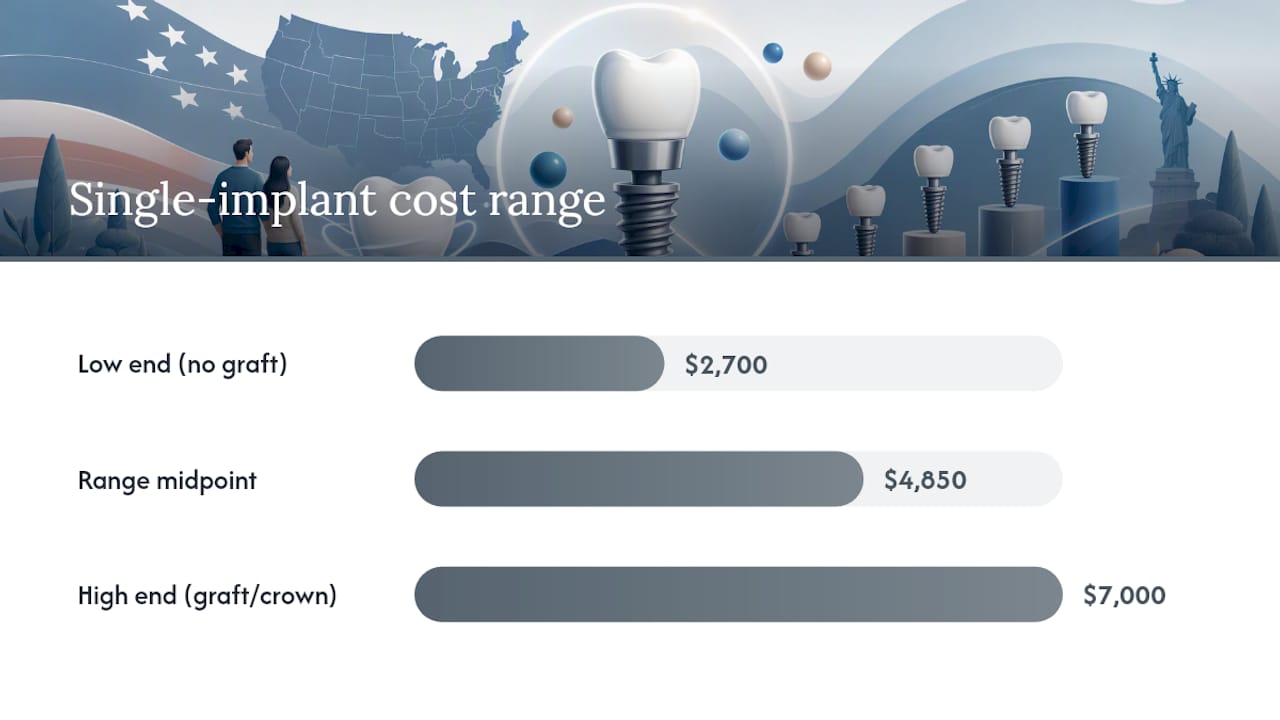
A single implant typically runs $2,700 to $7,000 depending on grafting needs and crown material, which is often more than one year’s FSA election covers on its own.
How Do You Stretch FSA Funds Across a Multi-Stage Implant?
That cost gap is exactly why timing matters as much as eligibility. The elective limit sits at an annual maximum amount, but your full election is available on day one of your plan year, not accrued paycheck by paycheck.
A few tactics make a real difference:
- Stage the procedure across two plan years. Schedule the surgical placement in December and the final crown in January, and you effectively access two separate annual elections for one continuous treatment.
- Use a spouse’s FSA alongside your own. If your spouse has separate employer coverage, that’s a second $3,400 election, potentially doubling your available pre-tax funds.
- Time your election to open enrollment. Estimate your total implant cost before enrolling, so you’re not stuck with an election too small for the treatment ahead.
Treat the annual election like interest-free financing available upfront: because the full amount is accessible immediately, scheduling multi-stage care early in the plan year gets you the most flexibility. This staging approach, outlined in guidance from Growing Family Benefits, is one of the most practical ways patients close the gap between the FSA limit and actual implant cost.
- Confirm your plan’s grace period or carryover rules before you count on rolling funds forward
- Check whether your employer’s plan year matches the calendar year or a different fiscal cycle
Where Does Insurance and Your HSA Fit In?
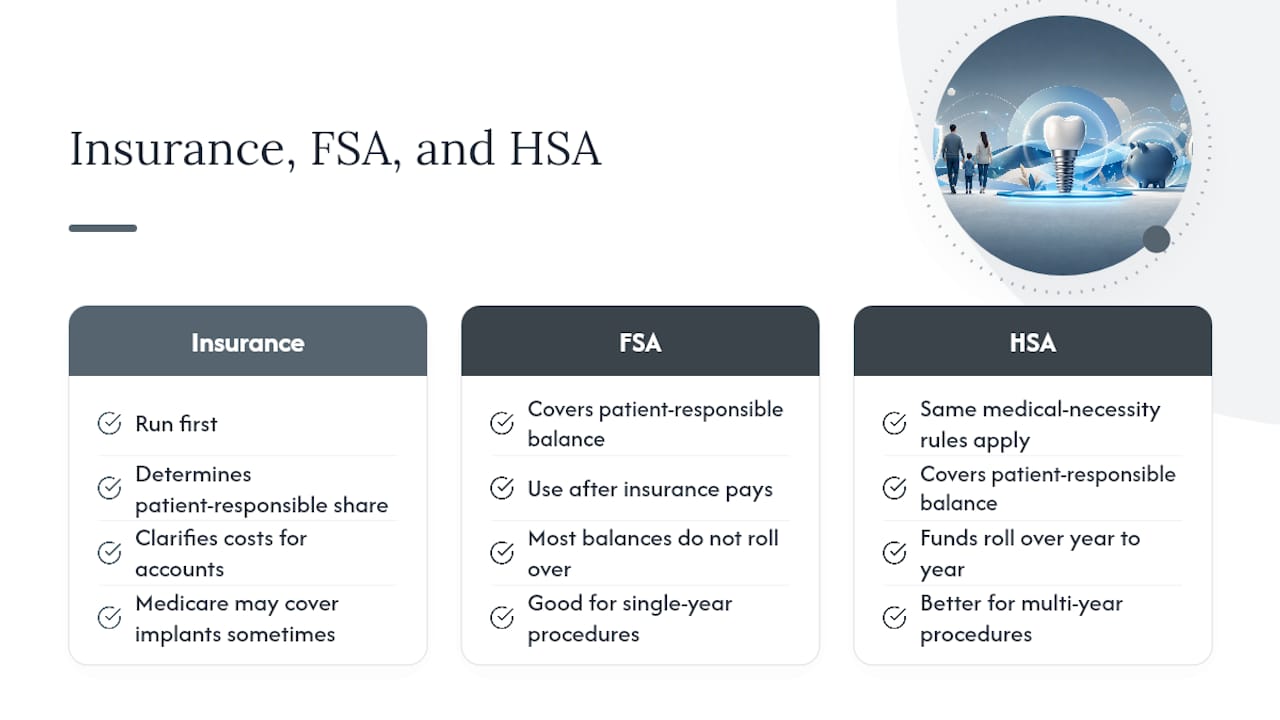
Run your dental insurance first; understanding Medicare coverage for dental implants can clarify what costs you may need to cover with your FSA or HSA. Whatever it doesn’t cover, your FSA can absorb, since FSAs are built to handle the patient-responsible balance after insurance pays its share.
If you have an HSA instead of an FSA, the same medical-necessity rules apply, but with one major difference: HSA funds roll over year to year, while most FSA balances don’t. That makes an HSA more forgiving for a procedure that might stretch across a longer timeline. A Limited-Purpose FSA paired with an HSA covers dental and vision only, and some administrators exclude implants from LPFSA reimbursement even when a standard FSA would allow it, so check your plan documents before assuming coverage.
How Do You Actually File the Claim?
Filing is straightforward once your documentation is in order, but the sequence matters.
- Collect the itemized invoice and treatment plan from your provider.
- Request a Letter of Medical Necessity if there’s any chance the claim reads as cosmetic.
- Check your specific plan’s submission rules, since some require online portals while others accept mailed forms.
- Submit the claim with receipts and the LMN attached, then track the request until your administrator confirms receipt.
- If denied, gather your clinical records, resubmit with a clearer necessity statement, and cite IRS Publication 502 directly if the denial cites eligibility rather than documentation.
Pro Tip: FSAs reimburse based on the service date, not the payment date. If you paid a deposit in one plan year but the surgery happens in the next, file the claim against the year the actual procedure occurred, and watch your run-out window if you’re leaving a job or changing plans.
How Implantveneerguide’s Tools Help You Plan the Claim
Building a strong FSA claim starts with knowing whether your case is genuinely restorative, and that’s where Implantveneerguide’s Dental Implant Candidacy Checker helps you think through your situation before you ever sit down with a provider. Pair it with the Cost Estimator to set a realistic election during open enrollment, especially if your case involves grafting or a multi-stage timeline. For deeper context, Implantveneerguide’s guides on HSA versus FSA rules and financing alternatives round out the planning picture.
What I’d Prioritize If I Were Planning This
Documentation beats hope every time. Get your Letter of Medical Necessity lined up before surgery, not after a denial, and request preapproval whenever your case sits anywhere near the cosmetic line. If your implant spans two plan years, plan the staging deliberately rather than letting the calendar decide for you. And always double check your specific administrator’s rules. They vary more than most people expect.
— Georgina
Plan Your Implant Costs Before You Commit to Treatment
Most people find out their FSA election is too small only after they’ve already scheduled surgery. Implantveneerguide built its tools to fix that timing problem before it costs you money. The Dental Implant Candidacy Checker helps you document restorative need in plain language you can bring straight to your dentist, and the Cost Estimator gives you a realistic dollar range based on U.S. treatment patterns, so your open enrollment election isn’t a guess.
Both tools are free, evidence-based, and built by a platform that doesn’t sell treatment or push a specific provider. If you’re weighing implants against other options first, the Dental Procedures Overview walks through implants, grafting, and full-arch alternatives side by side. Run your numbers through the Cost Estimator before your next open enrollment window closes.
This article is general information, not a substitute for advice from a qualified doctor. Consult a qualified healthcare professional about your own circumstances before acting on anything here.
Sources
- Publication 502 (Medical and Dental Expenses) — IRS
- Eligible Health Care FSA (HC FSA) Expenses — FSAFEDS
- Can I Use FSA for Dental Implants? Coverage and Limits — LegalClarity
- Dental Implants guide — WebMD