Medicaid Dental Implants: What Coverage Looks Like by State
Medicaid generally does not pay for dental implants if you’re an adult, and most states exclude them outright as a cosmetic or elective procedure. The exceptions matter, though. Children and teens under 21 can qualify through a federal program called EPSDT when implants are medically necessary. A handful of states also publish implant reimbursement rates for adults in narrow, medically justified cases, but getting approved almost always requires prior authorization and heavy documentation from your dentist.
Here’s the short version before you read further:
- Most adults: implants typically aren’t covered; exceptions are rare and state-specific.
- Kids under 21: EPSDT can require coverage when an implant is medically necessary.
- A few states (like New York and Iowa) publish implant fee schedules, but publication doesn’t mean automatic approval.
- Your move: call your dentist’s billing office or your state Medicaid dental line and ask directly what your state covers.
Key Takeaways
Medicaid implant coverage depends almost entirely on your age, your state, and the strength of your medical-necessity documentation, not on simply asking.
| Point | Details |
|---|---|
| Adults face state-by-state limits | Most states treat adult implants as optional and often excluded; check your state’s dental policy manual directly. |
| Kids under 21 have stronger rights | EPSDT can require implant coverage when medically necessary, unlike the optional adult benefit. |
| Publication isn’t approval | About 8 of 51 states list implant reimbursement rates, but each case still needs documented medical necessity. |
| Documentation drives approval | Narrative treatment plans, imaging, and specialist consult notes make or break a prior authorization request. |
| Prepare before you file | Implantveneerguide’s candidacy checker and checklist help you organize the clinical case before submitting a request. |
This article is general information, not a substitute for advice from a qualified doctor. Consult a qualified healthcare professional about your own circumstances before acting on anything here.
Table of Contents
- How Medicaid Dental Coverage Actually Works
- Which States Publish Implant Coverage Rates
- What Clinical Situations Actually Get Approved
- How to Request Coverage and Appeal a Denial
- What to Do if Medicaid Won’t Cover Your Implants
- How to Find Your State’s Exact Rules
- Why We Built Tools to Help You Prepare a Stronger Request
- Get Ready Before You File a Request
- Sources
How Medicaid Dental Coverage Actually Works
Medicaid dental benefits split into two very different tracks depending on your age. For beneficiaries under 21, the EPSDT benefit requires states to cover any dental service that’s medically necessary, including implants in the right clinical situation. That’s a federal mandate, not optional.
For adults, it’s a different story entirely. Medicaid.gov confirms that adult dental benefits are optional, which means each state decides what to cover, how much to pay, and where to draw the line on “major” procedures like implants, crowns, and bridges. Some states offer generous adult dental packages. Others cover emergency extractions and little else.
A few practical distinctions worth knowing:
- Fee-for-service states pay providers directly per approved procedure, with rules spelled out in a clinical policy manual.
- Managed care states route your dental benefit through a private plan (an MCO), which may apply its own prior authorization rules on top of the state’s.
- Your state’s Medicaid website usually has a dental provider manual or clinical criteria document. That’s the actual source, not a summary someone wrote on a forum.
Which States Publish Implant Coverage Rates
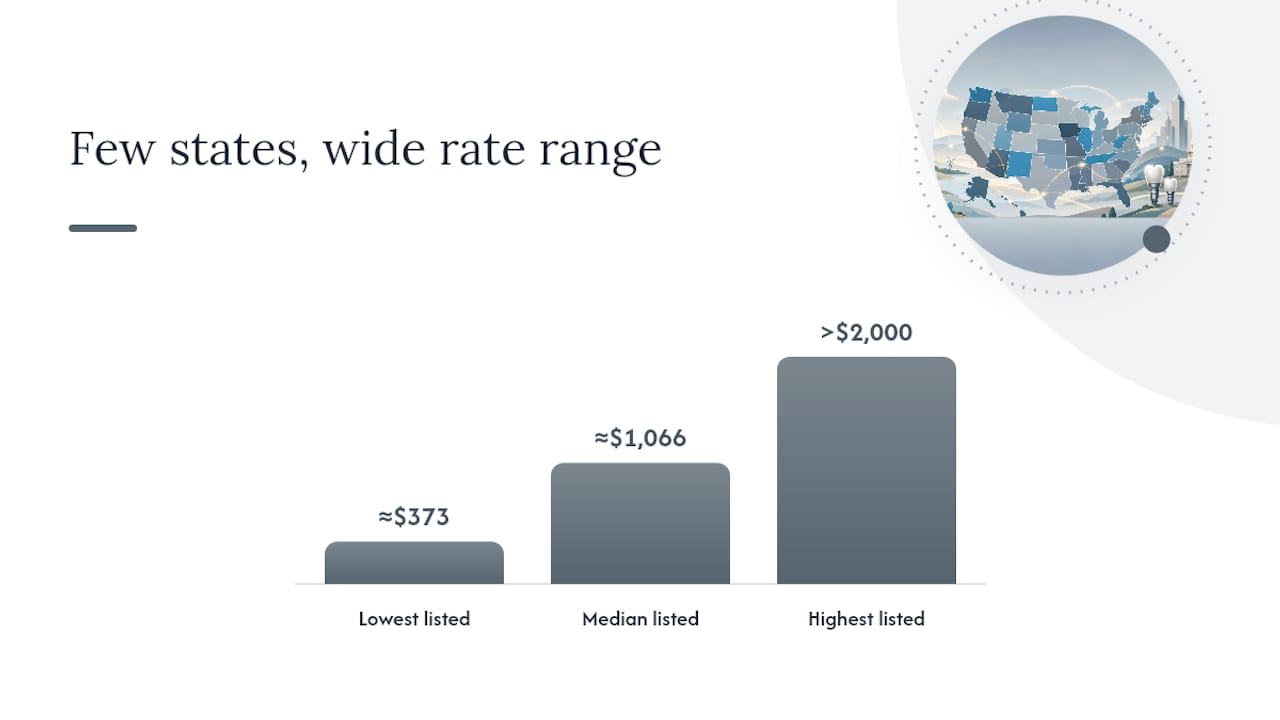
Only a small slice of the country puts dental implants on paper at all. A compilation of state Medicaid fee schedules found that roughly 8 of 51 jurisdictions list a reimbursement rate for implant placement, with rates ranging widely, from around $373 to over $2,000, and a median near $1,066.
States that show up in these listings include New York, Iowa, Kentucky, Massachusetts, Missouri, and Washington, D.C. New York’s Medicaid guidance is one of the clearer examples: it explicitly allows implant coverage in certain medically necessary circumstances, and as of January 31, 2024, the state dropped its requirement for a physician’s letter before covering replacement dentures and implants. That one procedural change made access noticeably simpler for New York beneficiaries who qualify.
A few things to keep in mind if your state is on this list:
- A published rate is a fee amount, not a coverage guarantee. It tells you what Medicaid would pay if the case is approved, nothing more.
- Approval still hinges on documented medical necessity, reviewed case by case.
- These approvals are uncommon. Don’t expect a routine implant consult to sail through without a strong clinical justification behind it.
What Clinical Situations Actually Get Approved
Medicaid reviewers aren’t looking for “I’d prefer implants over dentures.” They’re looking for a diagnosis that makes dentures genuinely unworkable or medically inappropriate. The cases that tend to succeed fall into a fairly predictable list:
- Oncologic resection. Jaw or oral cancer surgery that removed bone or tissue needed to support a removable prosthesis.
- Severe facial trauma. Accidents that destroyed enough bone structure that a denture has nothing stable to rest on.
- Congenital defects. Conditions like ectodermal dysplasia, where teeth never developed normally in the first place.
- Anatomical inability to wear dentures. Documented tissue conditions, severe bone loss, or a history of failed denture attempts.
Getting a request approved comes down to the paperwork almost as much as the diagnosis. Iowa’s Medicaid dental manual, for example, requires prior authorization for implant-related procedures, and cone beam imaging is only payable once that prior authorization is on file. Reviewers typically want a full package: a written narrative treatment plan, relevant medical and dental history, intraoral photos, X-rays or CBCT scans, and consult notes from any specialist involved. If dentures were already tried and failed, that record needs to be in the file too.
Pro Tip: Ask your dentist to have a prosthodontist or oral surgeon write or co-sign the prior authorization request. A specialist’s name on the documentation carries more weight with reviewers than a general dentist’s alone, especially in borderline cases.
How to Request Coverage and Appeal a Denial
Submitting a request and fighting a denial both follow a fairly standard sequence, whether you’re in a fee-for-service state or a managed care plan.
- Submit the request. Your dentist files prior authorization with the complete documentation package. Keep a copy and note the submission date.
- Track it. Follow up if you haven’t heard back within your state’s stated review window.
- If denied, get the reason in writing. States and MCOs are required to explain why.
- Submit supplemental evidence if you have it, then file the plan’s internal appeal.
- Request a state fair hearing if the internal appeal fails. This is a formal, independent review outside the Medicaid plan itself.
You generally have the right to appeal any denial, including through internal review and a fair hearing process. If your situation is urgent, for instance, ongoing pain or an inability to eat, ask specifically for expedited review. A patient advocate, legal aid office, or your dentist’s billing coordinator can help navigate the appeal if the process feels stuck. Our guide on getting implants covered by insurance walks through similar appeal tactics that overlap with Medicaid’s process.
What to Do if Medicaid Won’t Cover Your Implants
If implants aren’t in the cards for your state or your case, there are still real paths forward, and some of them are covered by Medicaid outright.
- Dentures and bridges. Most state Medicaid programs cover complete or partial dentures, and some cover fixed bridges. These remain the most reliable Medicaid-funded option for missing teeth.
- Dental schools and prosthodontic residency clinics. Supervised students and residents provide implant and denture work at a fraction of private-practice cost.
- Federally Qualified Health Centers (FQHCs) and sliding-fee clinics. Many accept Medicaid and adjust fees based on income for services Medicaid doesn’t fully cover.
- Financing. Out-of-pocket implant costs typically run into the thousands per tooth, so payment plans or dental credit financing are worth exploring if you’re paying privately. Our insurance and financing guide breaks down what those options actually cost.
- Medical vs. dental coverage. If your case involves trauma or cancer treatment, ask whether the reconstruction falls under medical coverage instead of dental, since the rules and appeal rights can differ. XactInsure’s breakdown of the Medicare dental gap is a useful reference if you’re also navigating Medicare alongside Medicaid.
How to Find Your State’s Exact Rules
Skip the guides that generalize across all 50 states. Go straight to the source.
- Search “[your state] Medicaid dental policy” or “[your state] dental fee schedule” to find the official document.
- Look for CDT procedure codes like D6010 (implant placement) listed in a clinical policy manual. If it’s not listed, it’s usually not covered.
- Check for a downloadable prior authorization form. Most states post one directly on the Medicaid dental page.
- If you’re enrolled in a managed care plan, call member services and ask them to send you the dental policy and prior authorization instructions in writing.
Why We Built Tools to Help You Prepare a Stronger Request
Implantveneerguide works from peer-reviewed research and input from dental professionals, not marketing copy, because Medicaid decisions hinge on documentation quality, not hope. Our Dental Implant Candidacy Checker and consultation checklist help you walk into your dentist’s office with the right questions and records already organized, before you ever file a prior authorization request.
— Georgina
Get Ready Before You File a Request
You’ve seen how much weight documentation carries in a Medicaid implant decision. There’s no dental school course or generic checklist that replaces knowing exactly what your case needs before you sit down with your dentist. That’s the gap Implantveneerguide fills.
Our Dental Implant Candidacy Checker walks you through the same clinical factors reviewers look for, bone health, denture history, anatomical limitations, so you show up to your consultation already knowing your realistic profile. Pair it with our consultation checklist to make sure your dentist has every document a prior authorization reviewer will ask for. Neither tool guarantees Medicaid approval; that decision belongs to your state program. What they do is stop you from finding out three months into the process that you were missing a specialist consult note. Start with the candidacy checker before your next dental appointment.
Sources
- Early and Periodic Screening, Diagnostic, and Treatment (EPSDT) — Medicaid
- Medicaid dental benefits — New York State Department of Health
- Dental implants Medicaid rates by state — ProviderSignal
- Iowa Medicaid dental services policy (dental manual excerpt)
Recommended
- Dental Insurance Coverage for Implants: 2026 Guide — Dental Education Guide
- Best Dental Insurance for Implants: 2025–2026 Guide — Dental Education Guide
- Dental Insurance and Financing for Implants and Veneers (U.S. Guide)
- How to Get Dental Implants Covered by Medical Insurance — Dental Education Guide